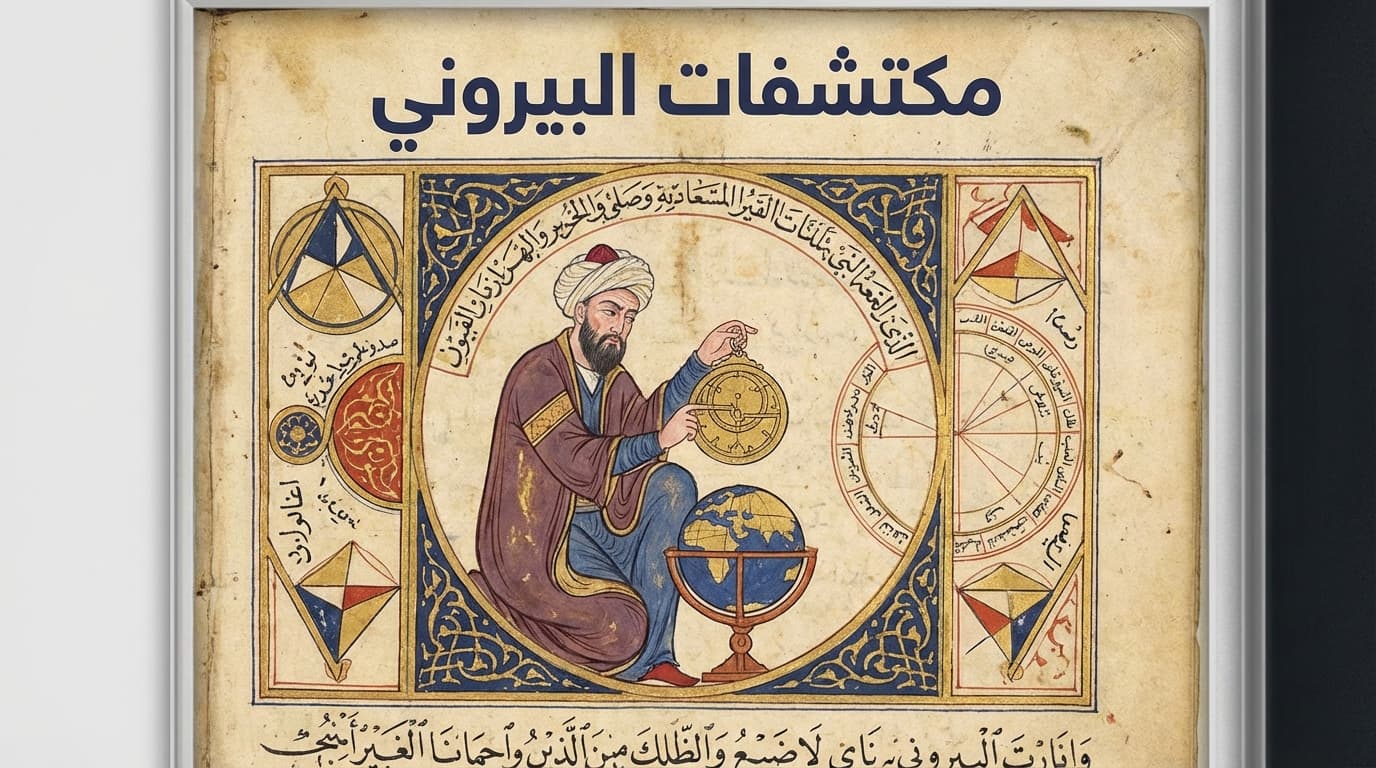
Introduction
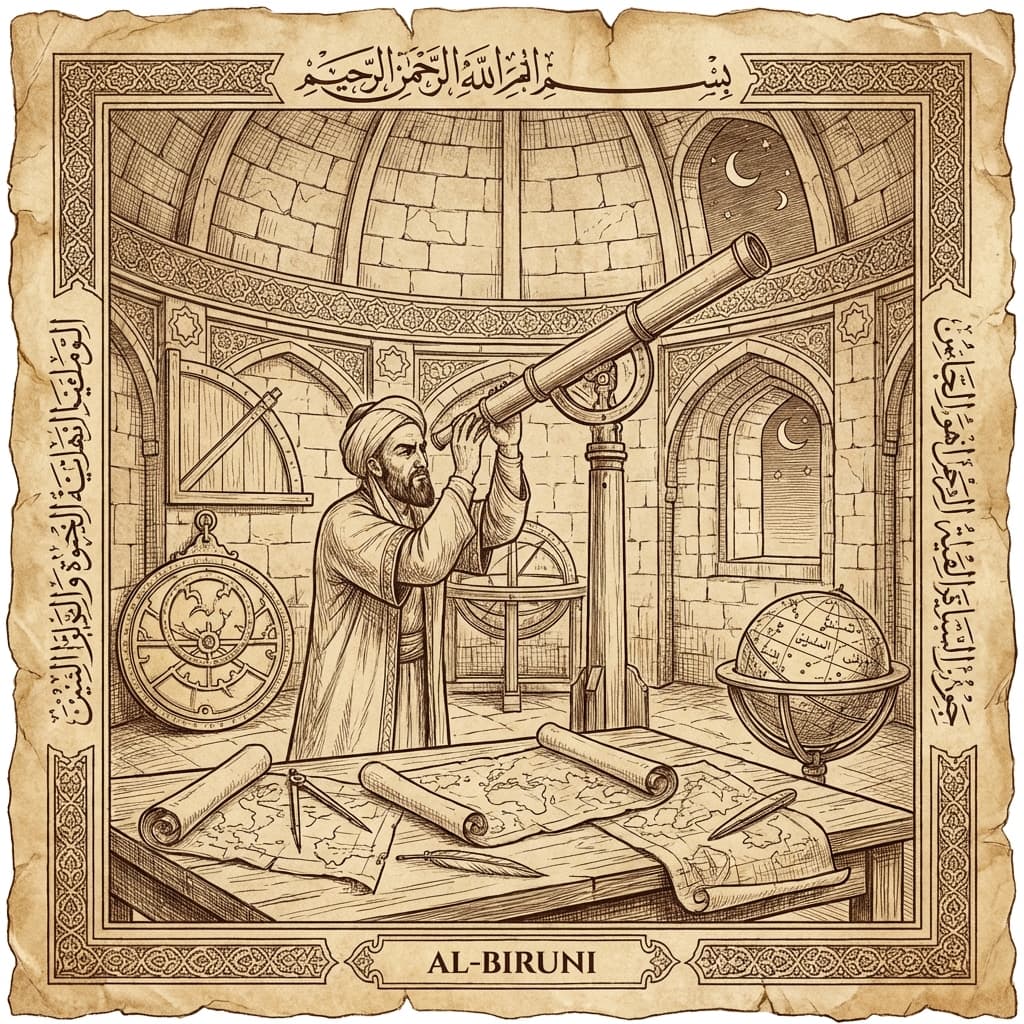
Abu Rayhan Muhammad ibn Ahmad al-Biruni (973–1050 CE) was a Khwarezmian scholar and polymath who made outstanding contributions to astronomy, mathematics, ethnography, and the natural sciences. He is regarded as one of the greatest scholars of the medieval Islamic world.
Al-Biruni was distinguished by his remarkably objective and scientific approach to studying other cultures, particularly his groundbreaking work on Indian civilization.
Early Life
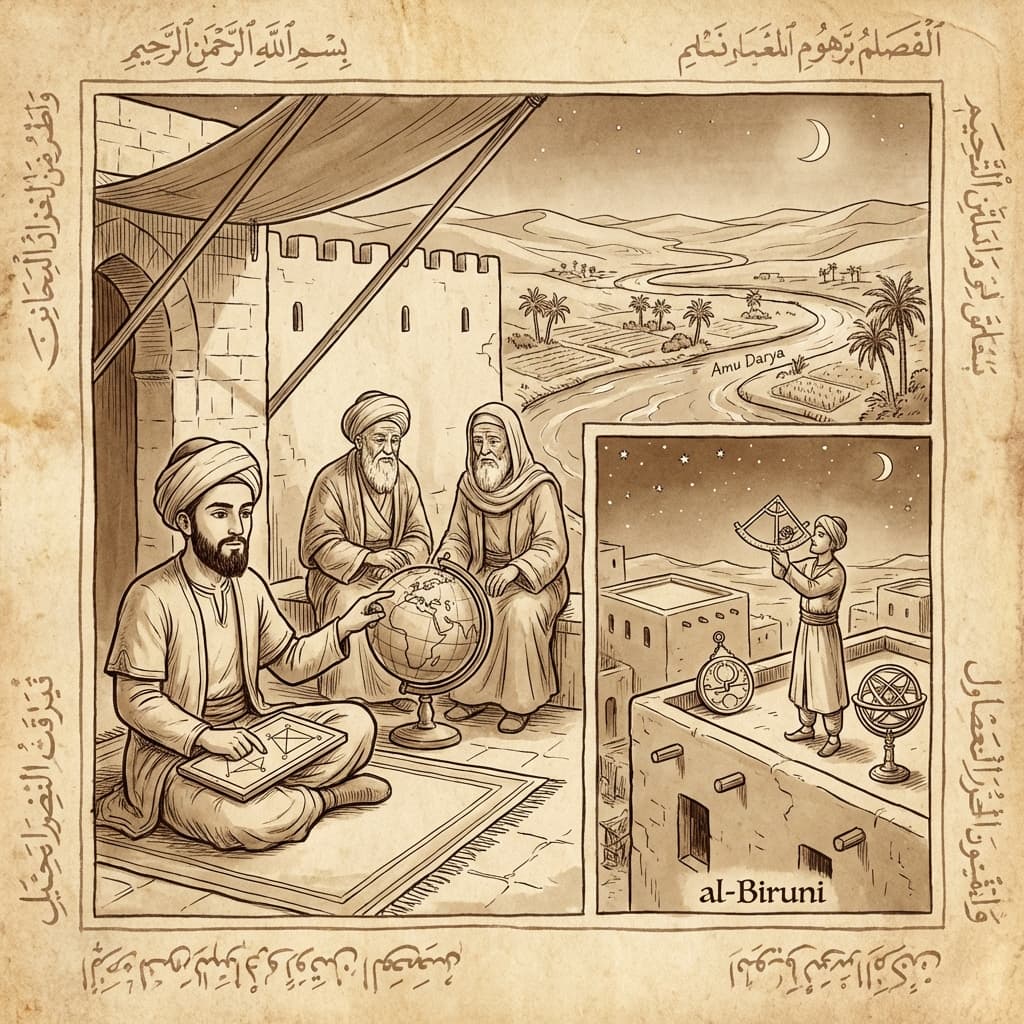
Al-Biruni was born in 973 CE in Kath, the capital of the Afrighid dynasty in Khwarezm (modern-day Uzbekistan). He showed exceptional talent from youth, studying mathematics and astronomy under local scholars.
Political upheaval in Khwarezm forced him to travel widely, eventually bringing him to the court of Mahmud of Ghazni. He accompanied Mahmud on campaigns to the Indian subcontinent, where he spent years studying Indian languages, religion, and science firsthand.
Contributions
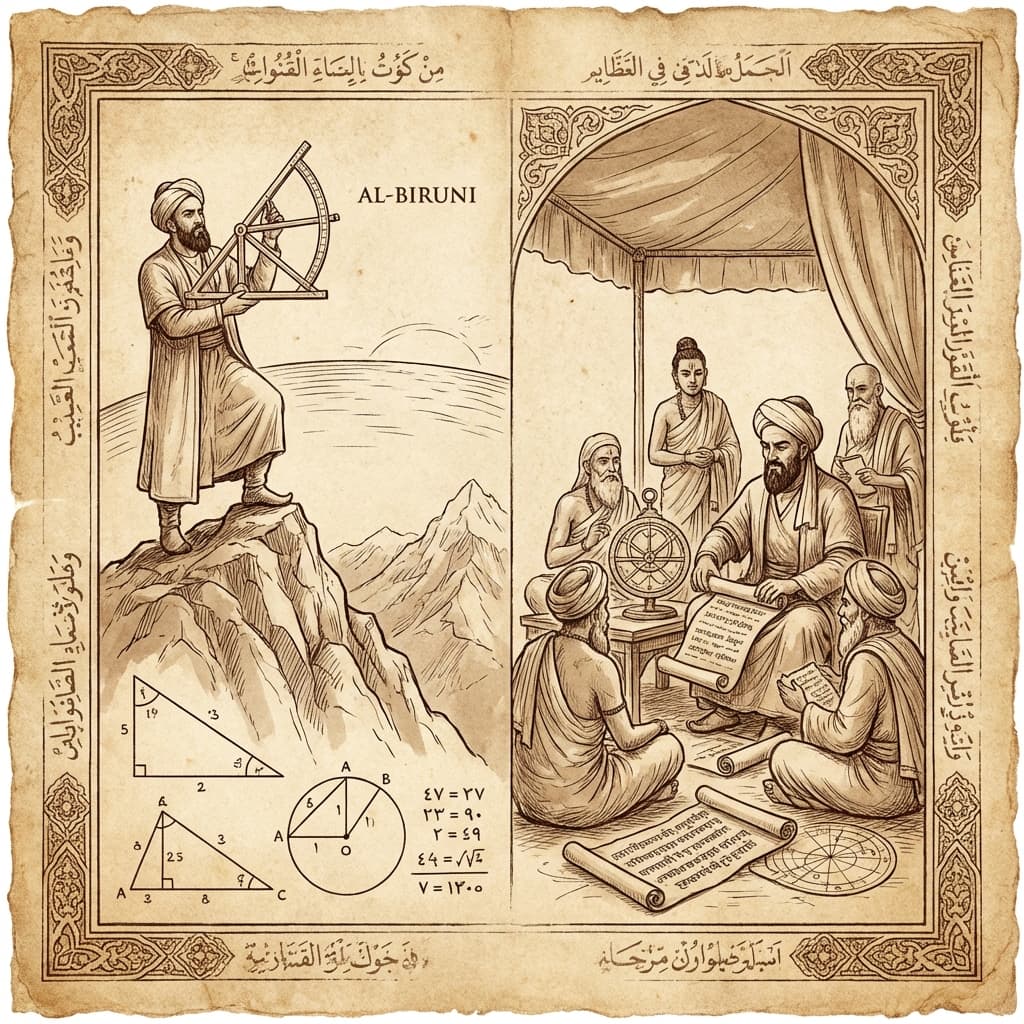
Al-Biruni's masterpiece, 'Tarikh al-Hind' (History of India), is a remarkably objective and comprehensive study of Indian culture, religion, philosophy, and science. It remains an invaluable primary source for understanding medieval India.
He calculated the Earth's radius with remarkable accuracy using trigonometry and observations from a mountaintop — his result was within 1% of the modern value. He also wrote extensively on mineralogy, pharmacology, and astronomy, producing over 100 works in his lifetime.
Legacy
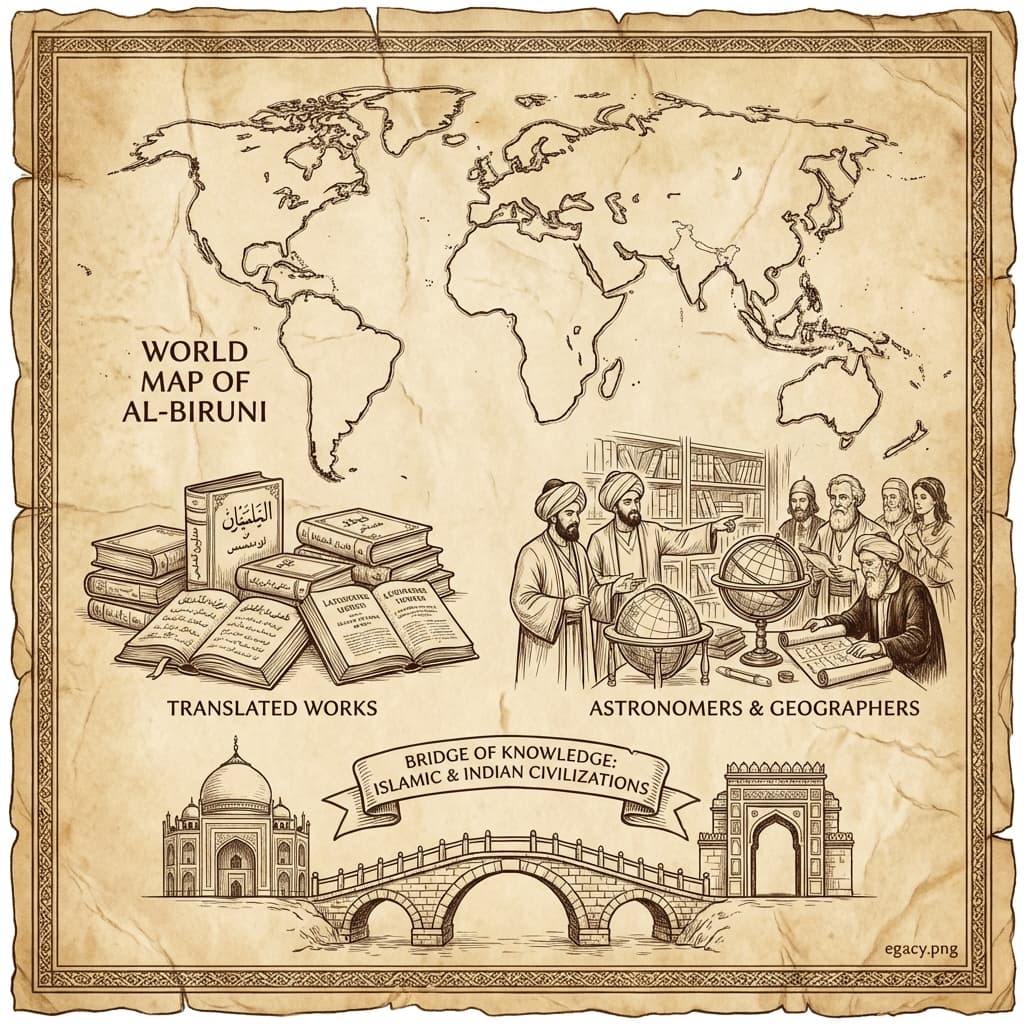
Al-Biruni is celebrated for his scientific methodology and his extraordinary objectivity in studying cultures different from his own. His approach to comparative religion and ethnography was centuries ahead of its time.
His astronomical calculations and geographic work contributed significantly to the advancement of these fields. He is regarded as one of the greatest intellects of the medieval world, and his works continue to inspire scholars in multiple disciplines.