Introduction
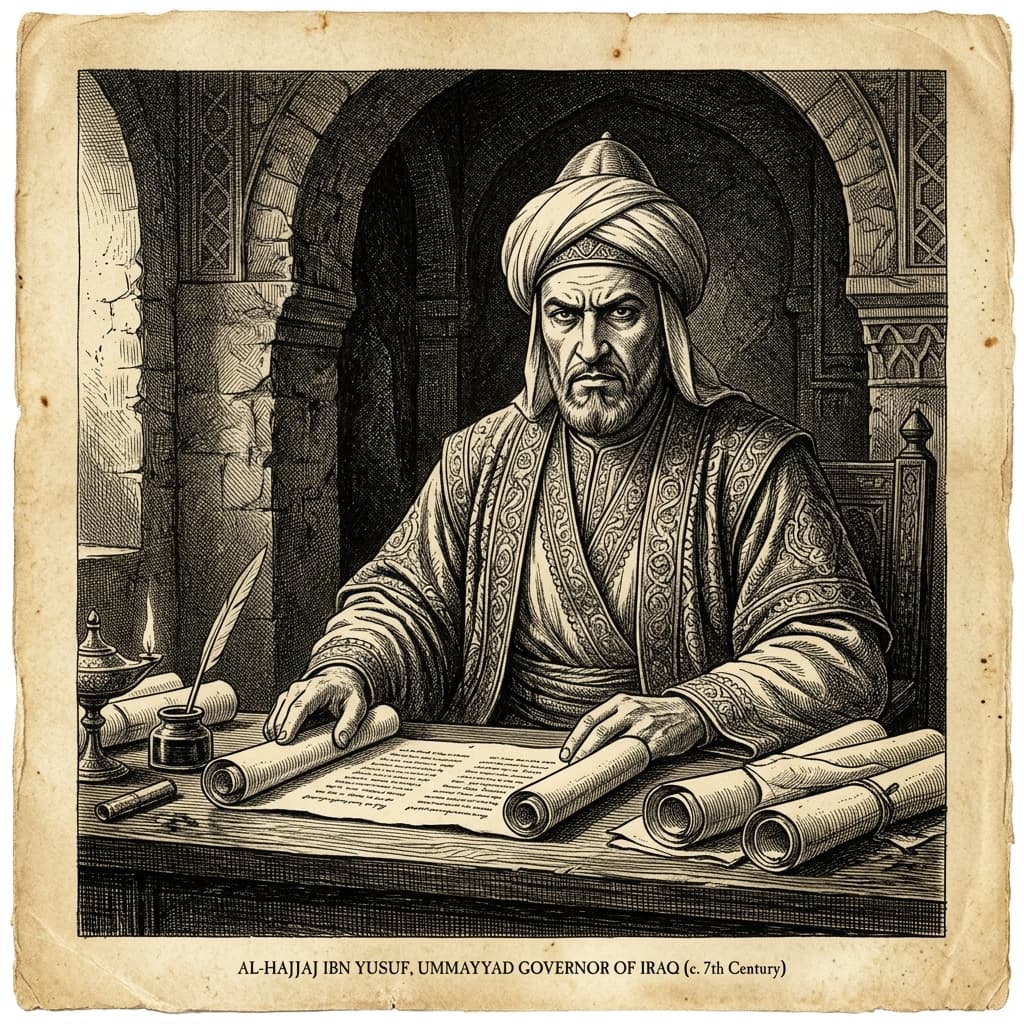
Al-Hajjaj ibn Yusuf al-Thaqafi (661–714 CE) was the most powerful and most feared administrator in Umayyad history. As governor of Iraq and the eastern provinces under Caliphs Abd al-Malik and al-Walid I, he crushed multiple rebellions, implemented sweeping administrative reforms, and transformed Iraq into the economic engine of the empire.
His name became synonymous in Islamic tradition with both organizational genius and ruthless coercion — a legacy so ambivalent that he remains one of the most debated figures of the early Islamic period.
Early Life
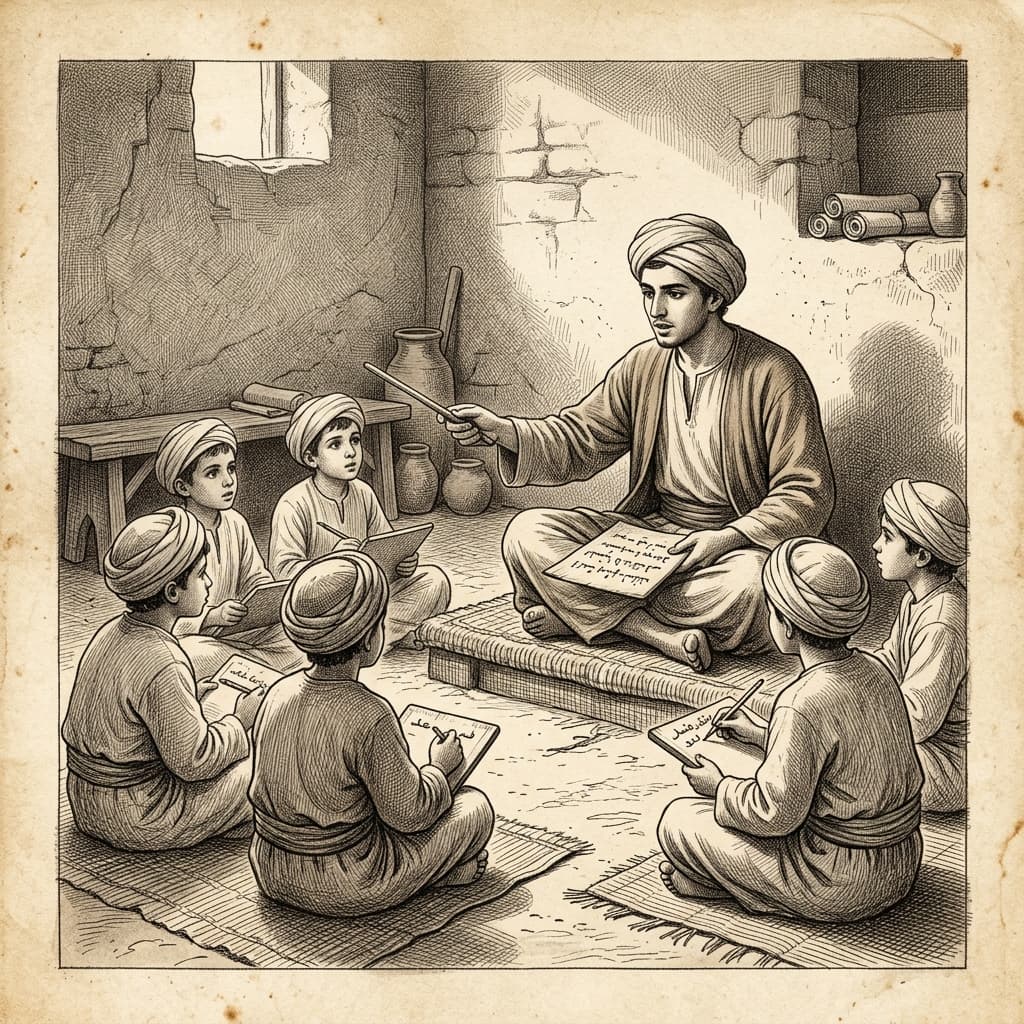
Born in 661 CE in Ta'if near Mecca, al-Hajjaj came from the Thaqif tribe and received a traditional education, serving for a time as a schoolteacher before entering military service. He first came to prominence as a military commander under Abd al-Malik during the Second Fitna, where he distinguished himself in the siege of Mecca and the defeat of the rival caliph Ibn al-Zubayr.
His success brought him to Abd al-Malik's attention as a man of exceptional ability and absolute loyalty, qualities that would make him indispensable to two successive caliphs. He was appointed governor of the Hejaz in 692 CE and then of Iraq and the eastern provinces in 694 CE.
Contributions
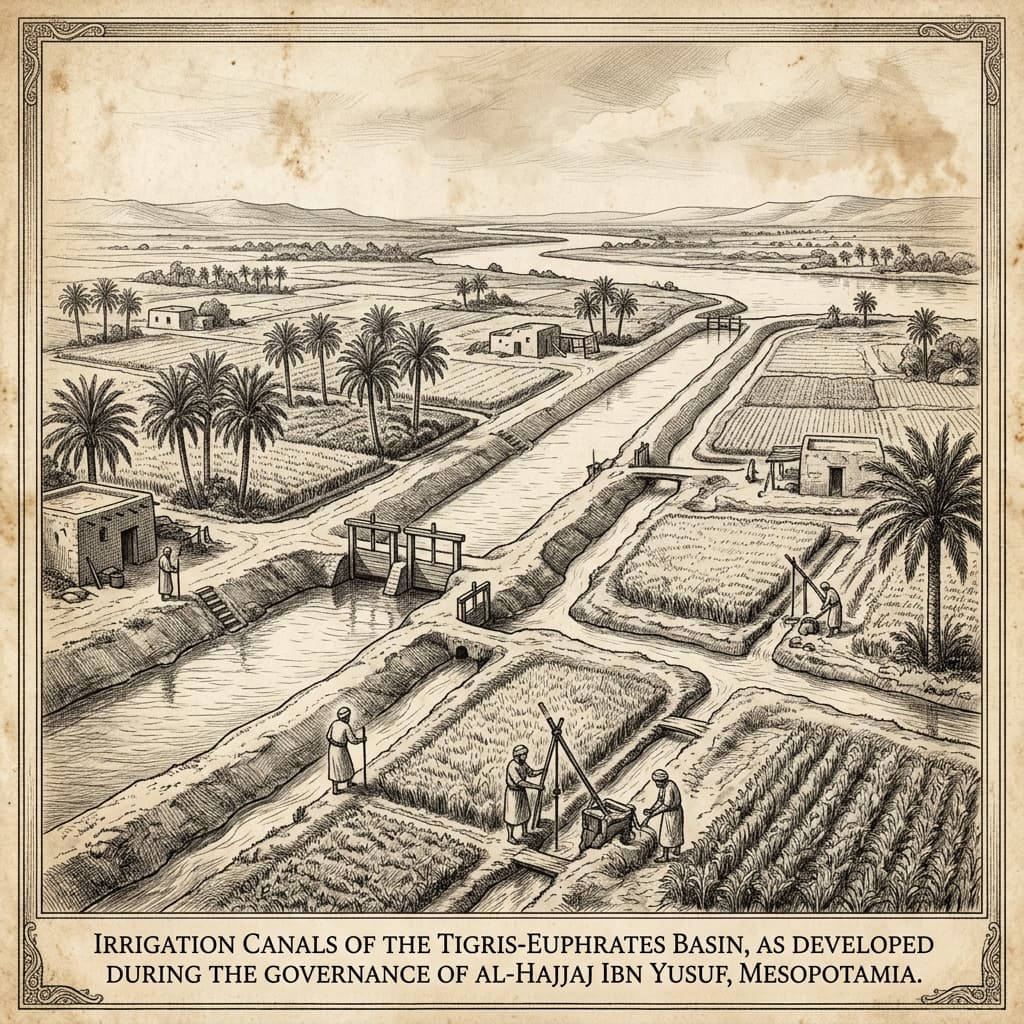
Al-Hajjaj's administrative contributions were transformational. He reorganized the provincial bureaucracy of Iraq, standardized weights and measures across the eastern provinces, implemented the Arabization reforms of Abd al-Malik, and oversaw major improvements to the irrigation infrastructure of the Tigris-Euphrates basin that significantly increased agricultural productivity.
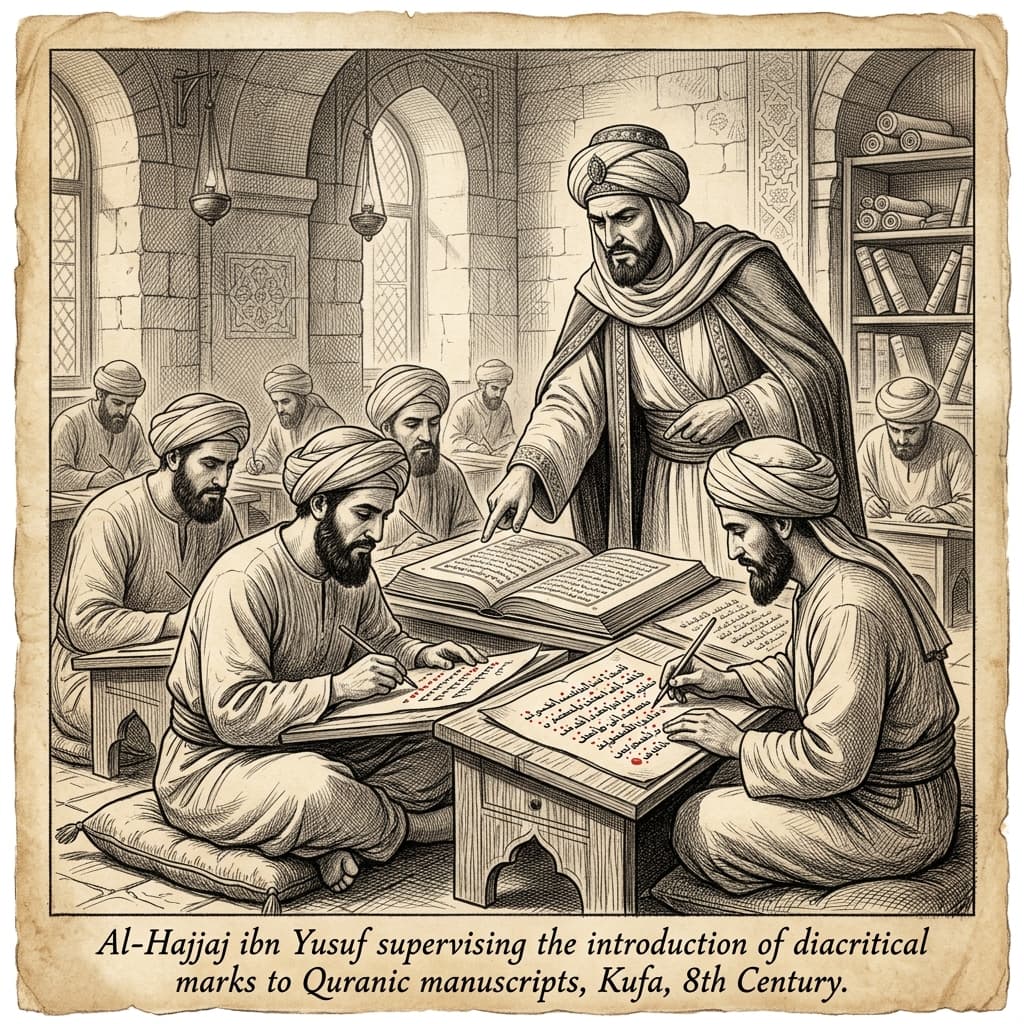
His most lasting cultural contribution was commissioning the addition of diacritical marks (tashkil) and vowel points (harakats) to the Arabic script, making accurate Quranic recitation possible across the diverse linguistic communities of the empire. This technical intervention preserved the oral tradition of Quranic reading in written form and remains a standard feature of Arabic script.
Legacy
Al-Hajjaj's legacy is inseparable from the means by which he achieved his results. His military campaigns killed tens of thousands, his harsh suppression of religious and political dissent made him one of the most feared figures of his era, and his name became a byword for tyrannical governance in Islamic tradition.
Yet his administrative achievements were real and consequential. The stability and prosperity of the eastern provinces under his governance laid the material foundation for the cultural flowering of the Abbasid era that followed. The irrigation systems he maintained and expanded fed millions; the Arabization he enforced spread the language of the Quran to new populations; the diacritical marks he commissioned preserved the textual integrity of the sacred text.