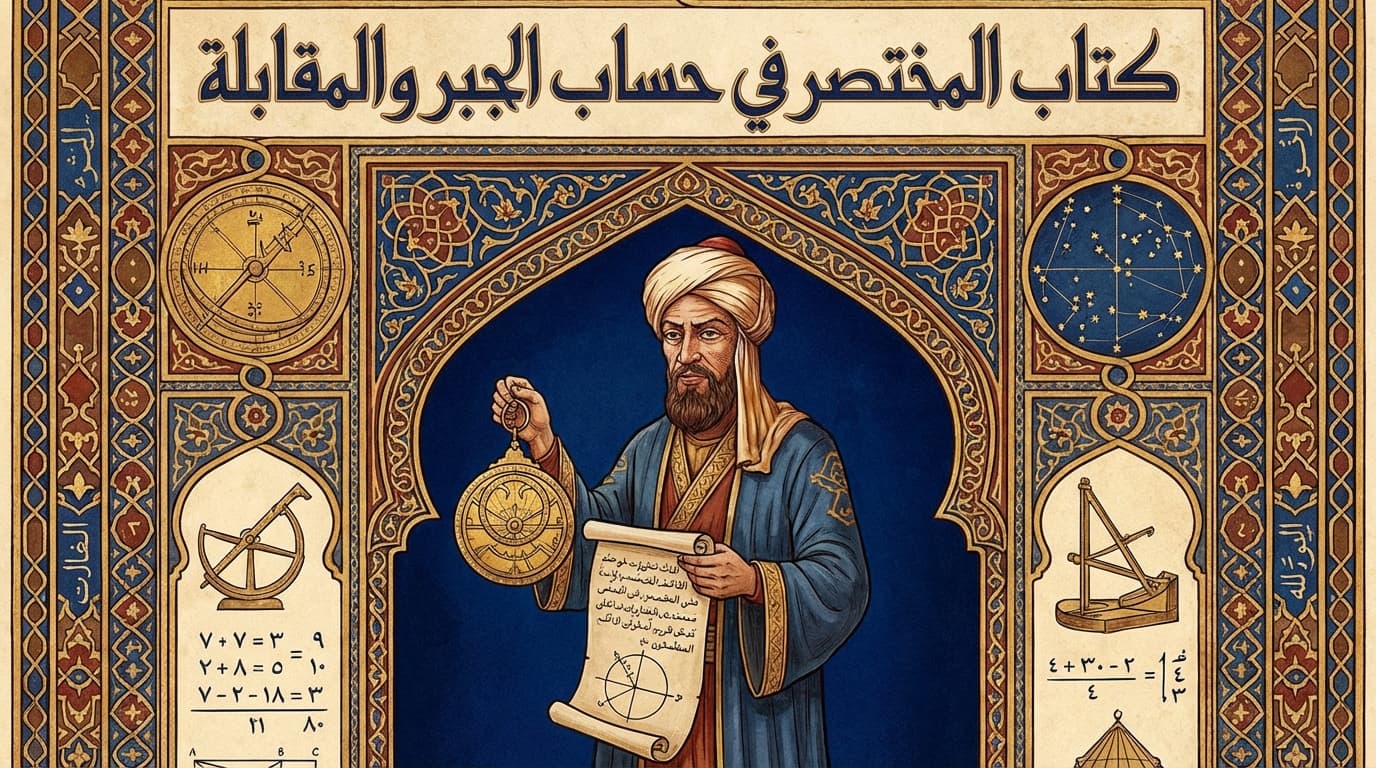
Introduction
Abu Abdullah Muhammad ibn Musa al-Khwarizmi was one of the most influential scholars of the Islamic Golden Age. Born around 780 CE in the region of Khwarezm (modern-day Uzbekistan), he became a towering figure in mathematics, astronomy, and geography.
His groundbreaking works laid the foundations for algebra as a distinct mathematical discipline, and his name gave rise to the modern term 'algorithm.' Working at the House of Wisdom in Baghdad under the patronage of Caliph al-Ma'mun, al-Khwarizmi helped transform the intellectual landscape of the medieval world.
Early Life
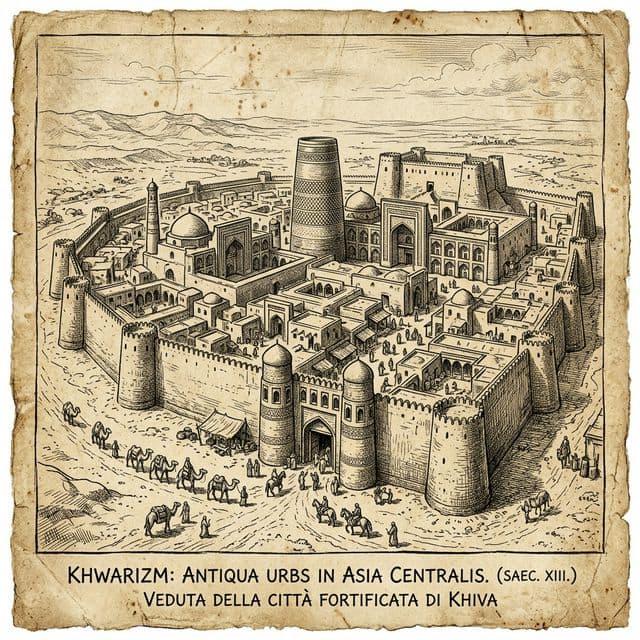
Al-Khwarizmi was born around 780 CE in Khwarezm, a region in Central Asia that is now part of Uzbekistan and Turkmenistan. Little is known about his early years, but his nisba (name indicating geographic origin) confirms his roots in this culturally rich region.
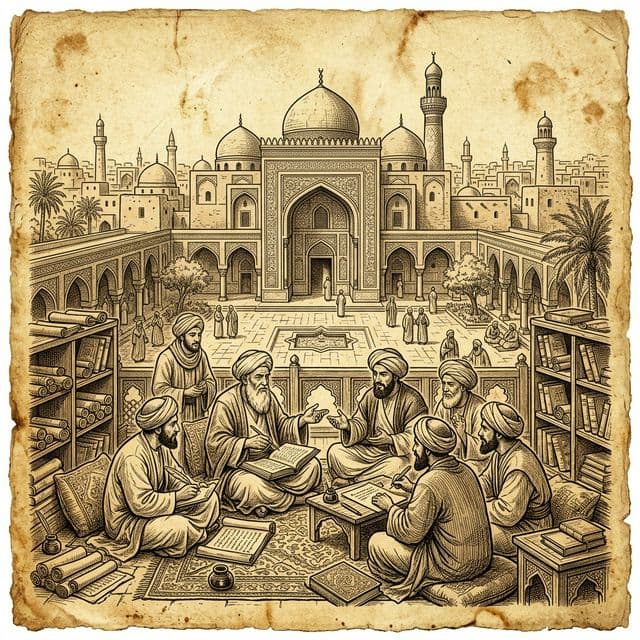
He moved to Baghdad, the capital of the Abbasid Caliphate, where he joined the House of Wisdom — the greatest center of learning in the medieval world. Under the patronage of Caliph al-Ma'mun, al-Khwarizmi had access to an extraordinary library of translated Greek, Persian, and Indian texts.
Contributions
Al-Khwarizmi's most famous work, 'Al-Kitab al-Mukhtasar fi Hisab al-Jabr wal-Muqabala' (The Compendious Book on Calculation by Completion and Balancing), introduced systematic methods for solving linear and quadratic equations. The word 'algebra' derives from 'al-jabr' in its title.
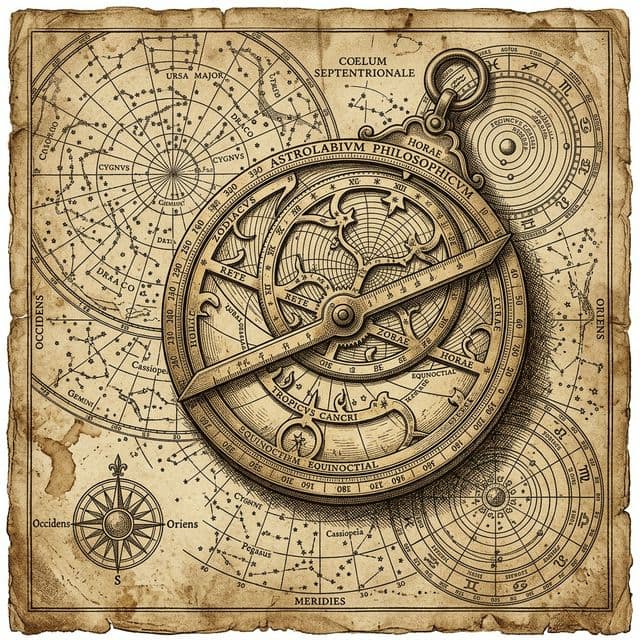
He also wrote a treatise on Hindu-Arabic numerals that, when translated into Latin, introduced the decimal positional number system to Europe. His astronomical tables (zij) synthesized Indian and Greek astronomical knowledge, and his geography text revised and corrected Ptolemy's work.
Legacy
Al-Khwarizmi's influence extends across centuries and civilizations. The Latinization of his name gave us the word 'algorithm,' now fundamental to computer science. His algebraic methods became the standard mathematical framework used worldwide.
His work on Hindu-Arabic numerals replaced the cumbersome Roman numeral system in Europe, revolutionizing commerce, science, and daily calculation. He is rightly regarded as the father of algebra and one of the most consequential mathematicians in human history.