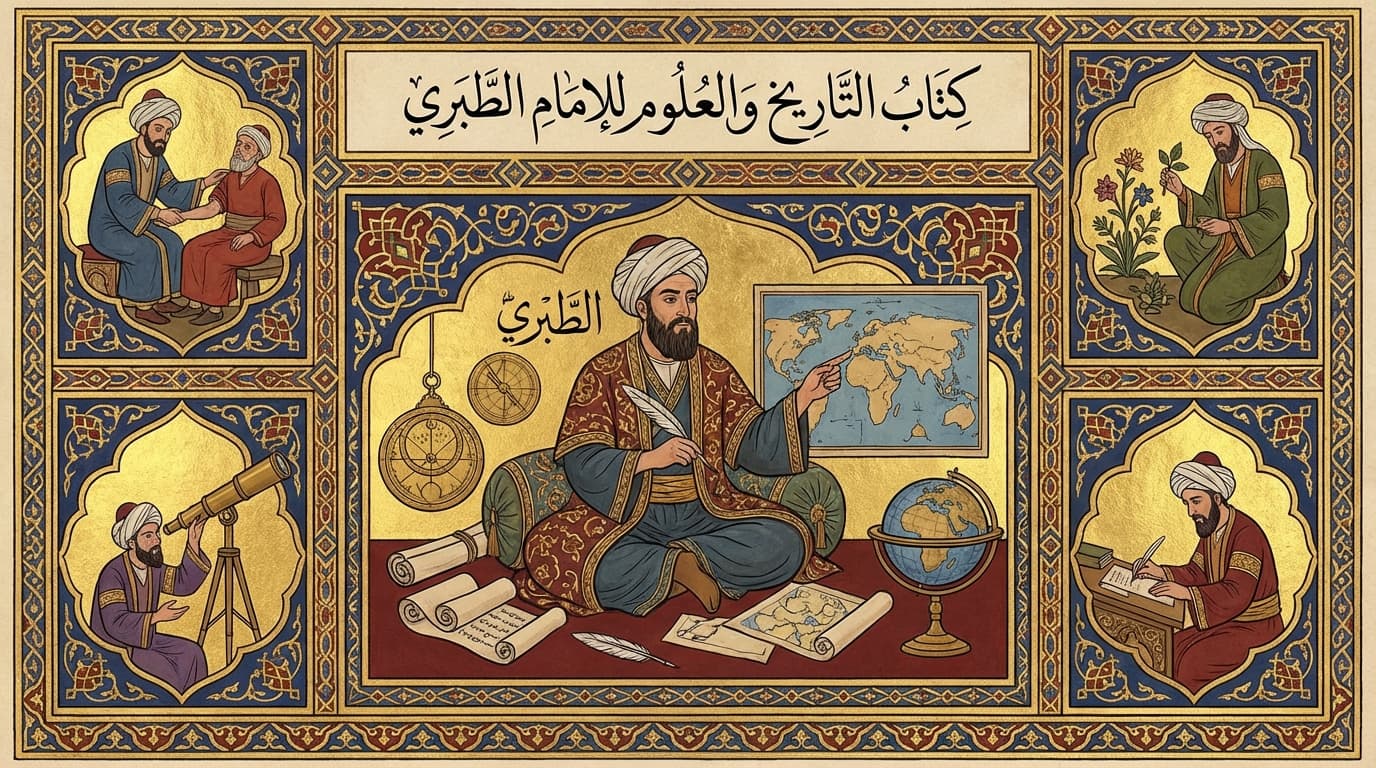
Introduction
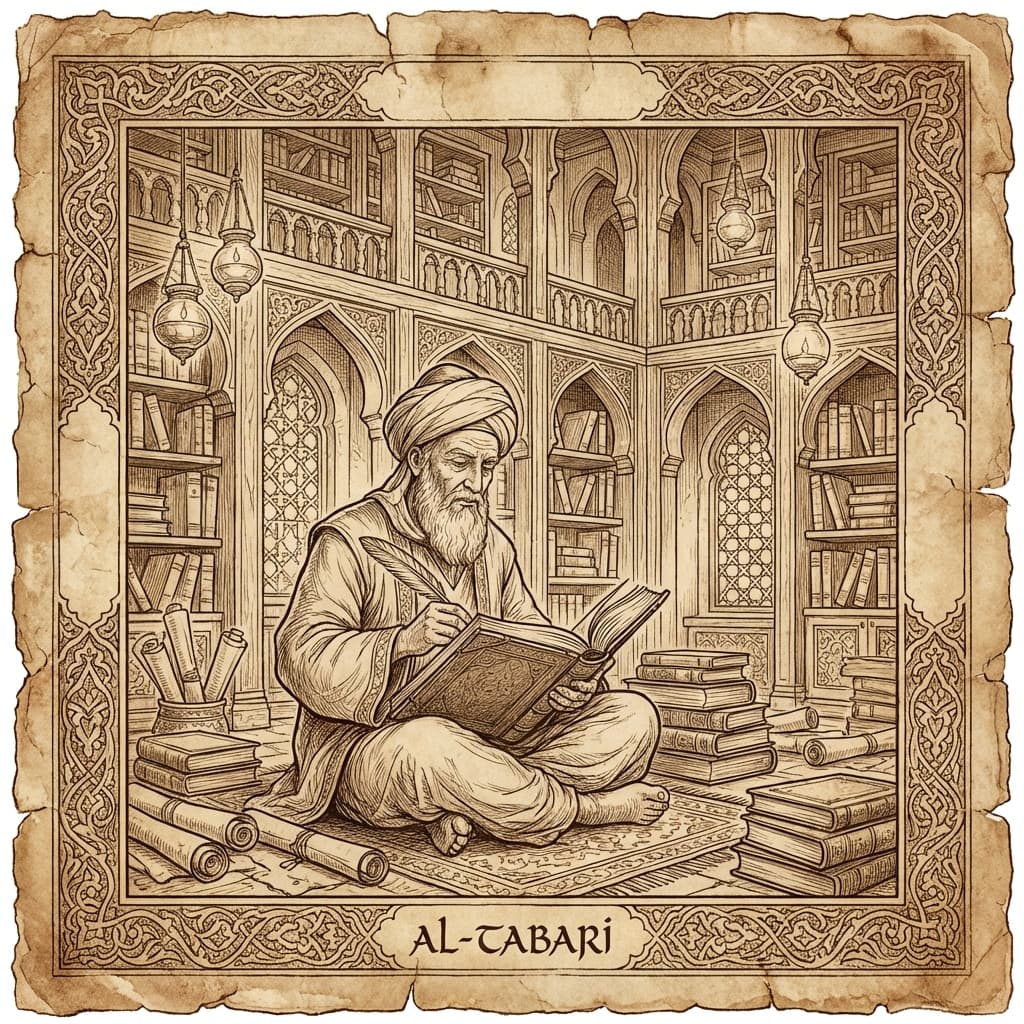
Abu Ja'far Muhammad ibn Jarir al-Tabari (839–923 CE) was a Persian scholar who became one of the most influential historians and Quranic exegetes in Islamic civilization. His works are considered foundational texts in Islamic scholarship.
Born in Amol, Tabaristan (modern-day Iran), he traveled extensively across the Islamic world seeking knowledge before settling in Baghdad, where he produced his monumental works that continue to be essential references today.
Early Life
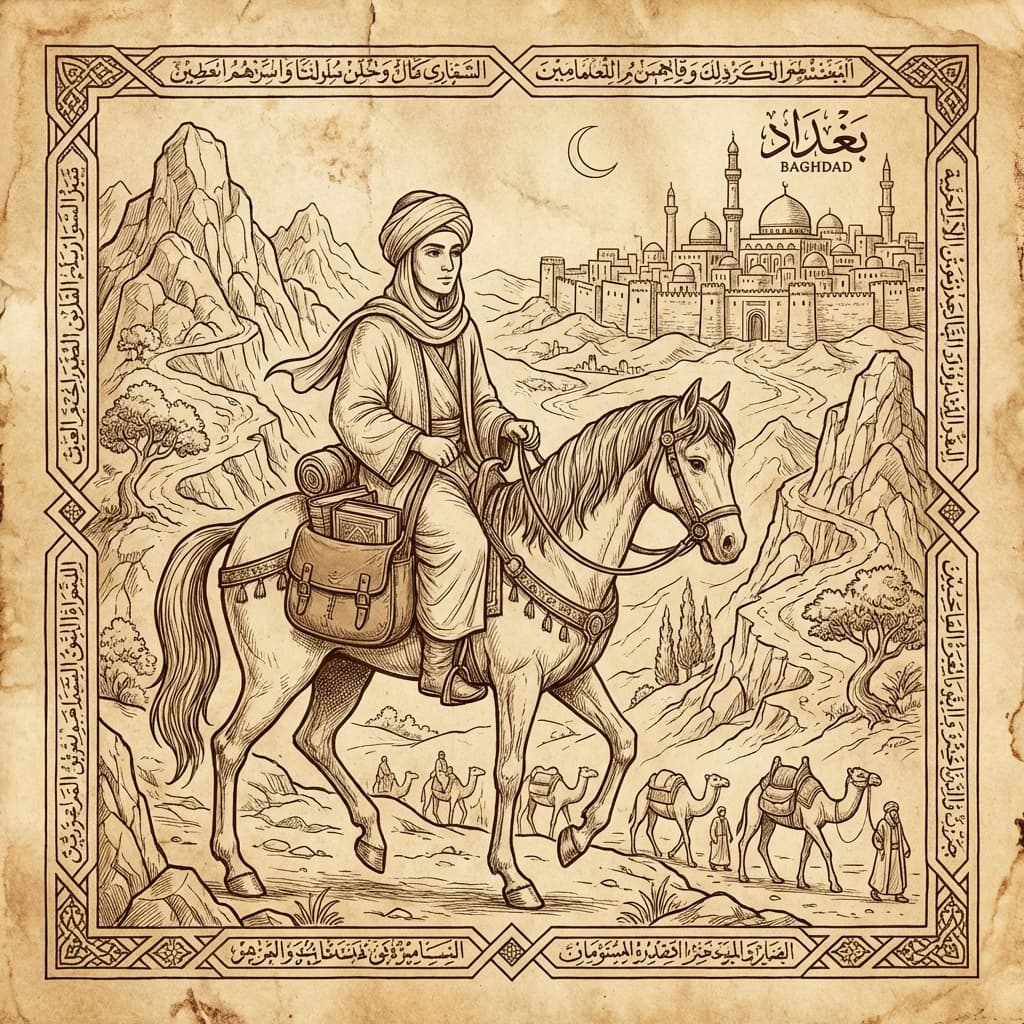
Al-Tabari was born in 839 CE in the city of Amol in the mountainous region of Tabaristan, south of the Caspian Sea. He memorized the Quran by the age of seven and began studying hadith at nine, demonstrating extraordinary intellectual ability from childhood.
He traveled to Ray, Basra, Kufa, and Egypt, studying under the foremost scholars of his time. He eventually settled in Baghdad, the intellectual capital of the Abbasid world, where he spent the rest of his life teaching and writing.
Contributions
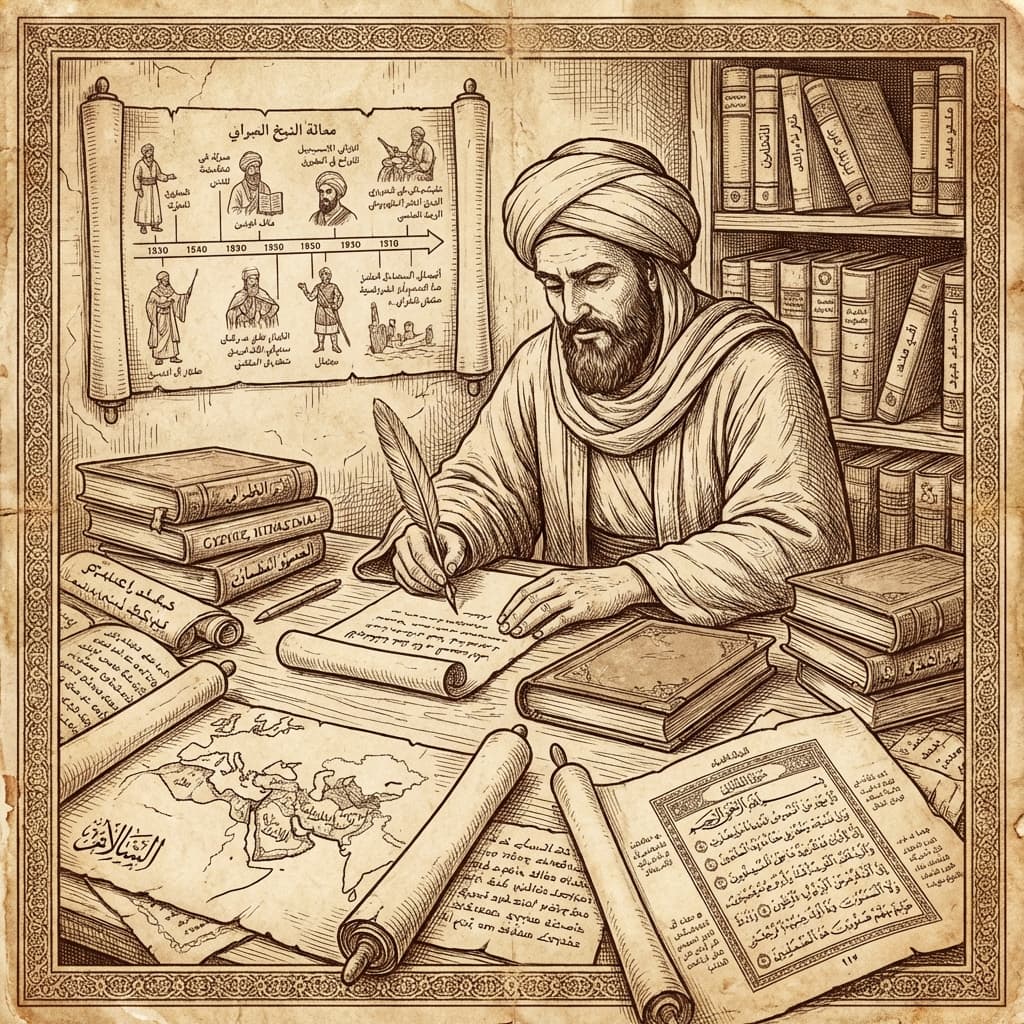
Al-Tabari's two masterworks are his 'History of the Prophets and Kings' (Tarikh al-Rusul wa'l-Muluk), a comprehensive world history from creation to his own time, and his monumental Quranic commentary (Tafsir al-Tabari), which remains the most important classical exegesis of the Quran.
His historical method was remarkably systematic — he compiled and organized chains of transmission (isnad) for each report, allowing readers to evaluate the reliability of different accounts. He also founded his own school of Islamic jurisprudence, the Jariri school.
Legacy
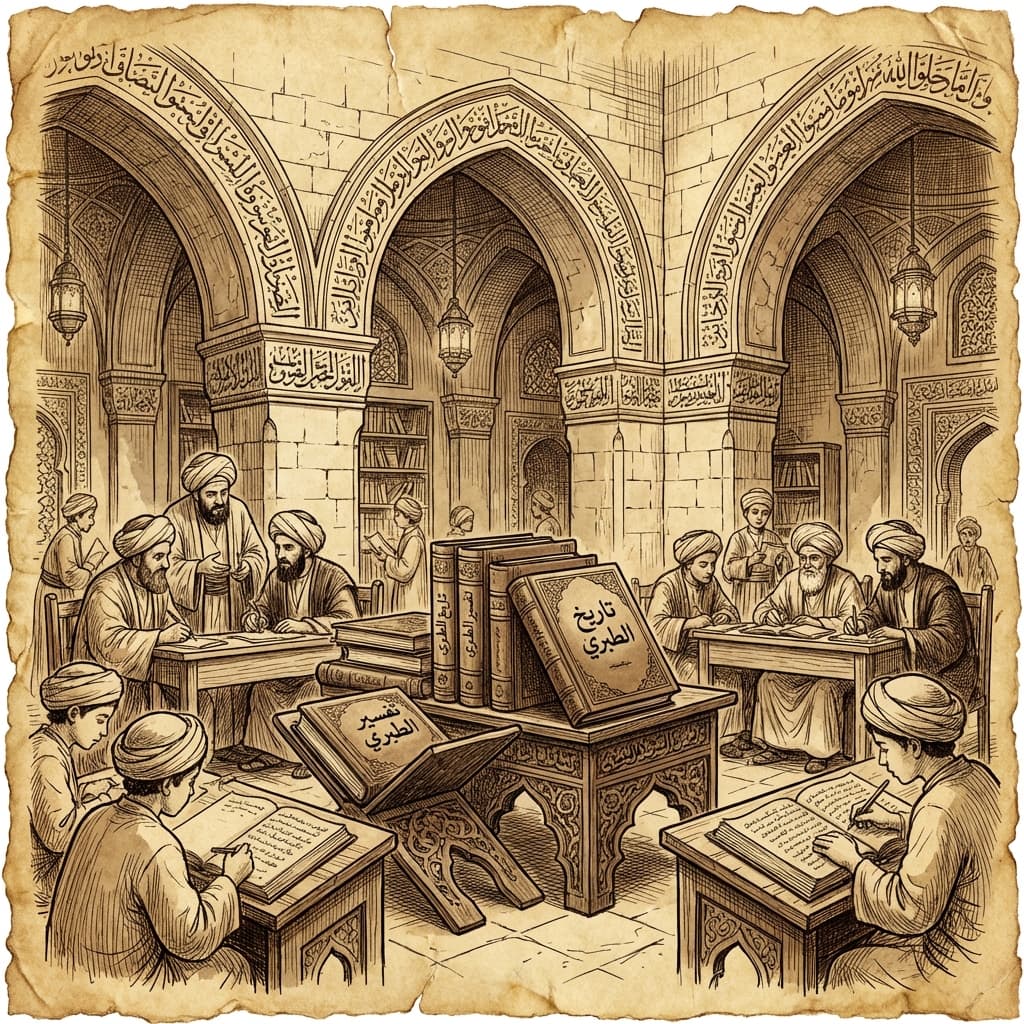
Al-Tabari's historical chronicle is the single most important source for early Islamic history. Nearly every subsequent historian drew upon his work, and his meticulous documentation preserved countless accounts that would otherwise have been lost.
His Quranic commentary set the standard for all later tafsir literature. His legacy endures in the vast scholarly tradition he helped establish, and his works continue to be studied in universities and seminaries worldwide.