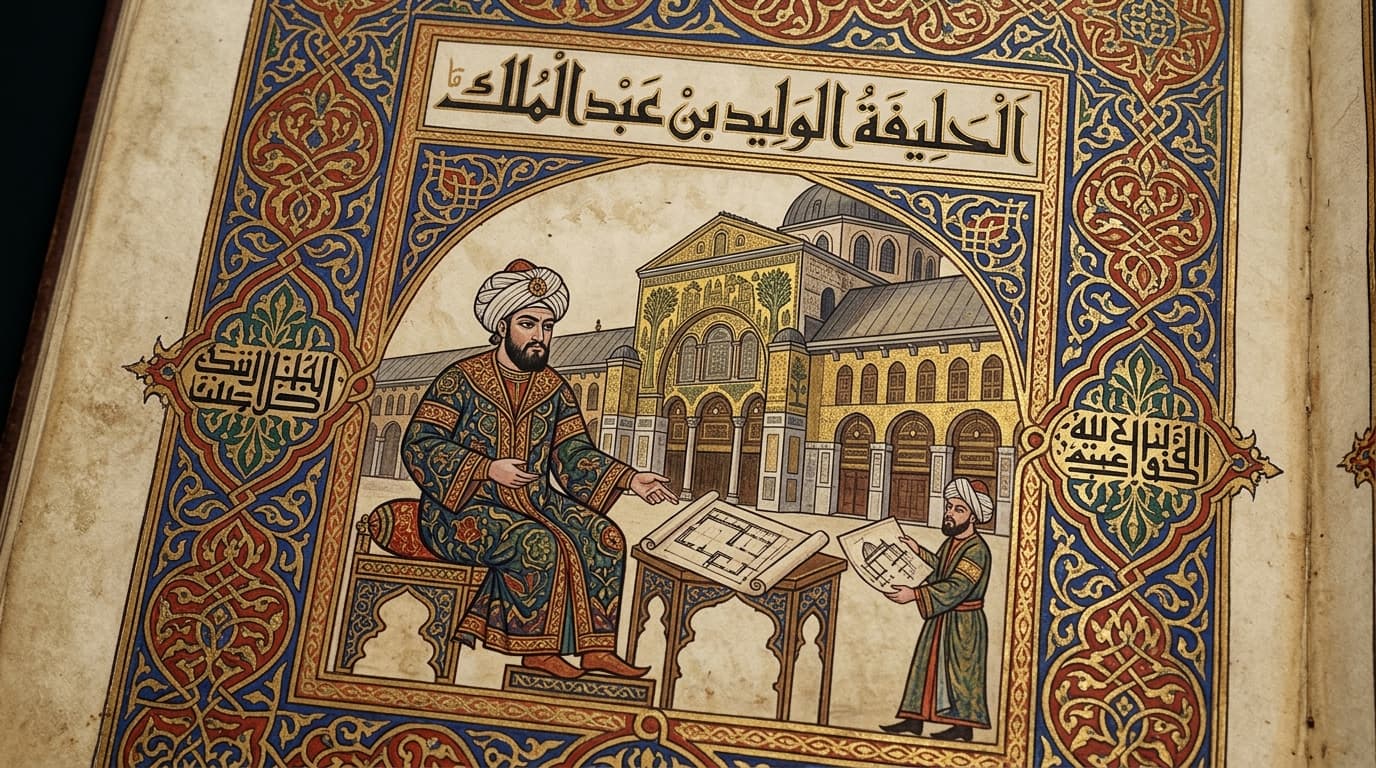
Introduction
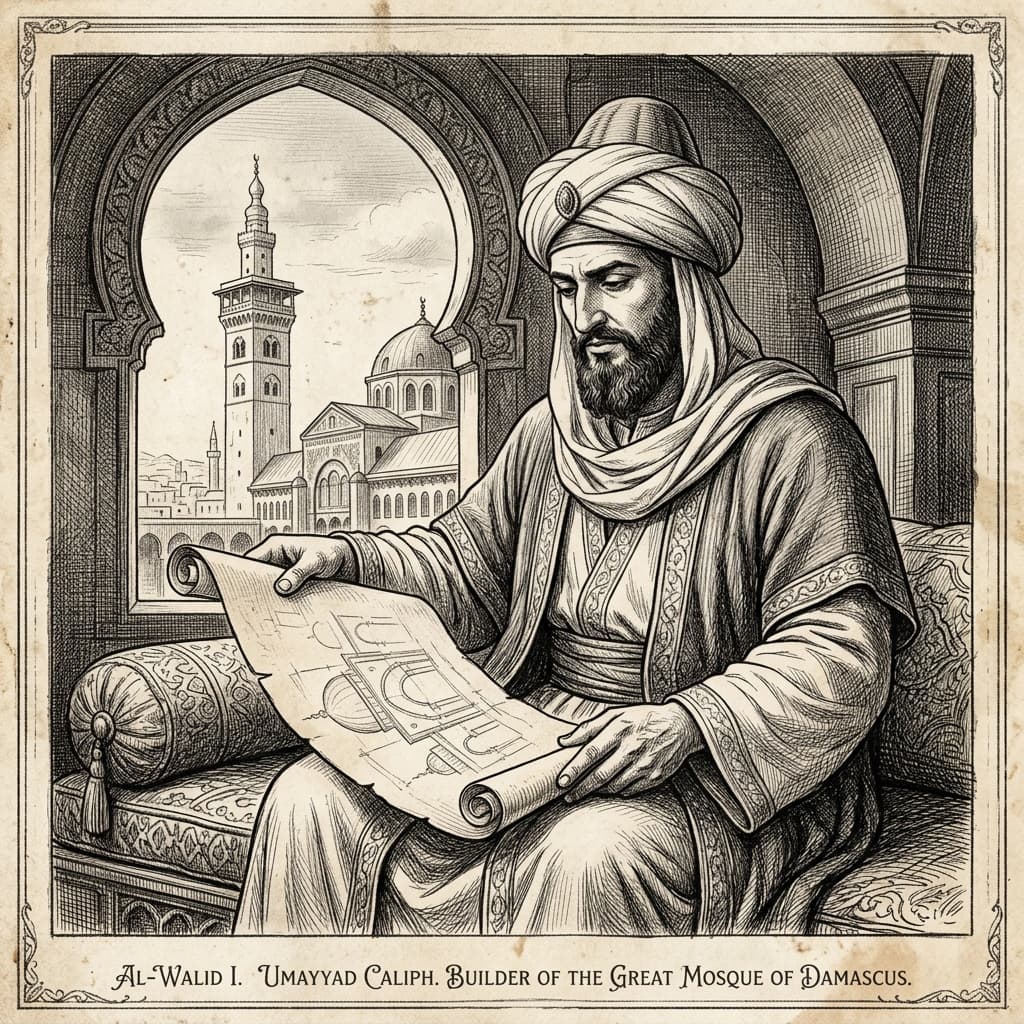
Al-Walid ibn Abd al-Malik (668–715 CE), the sixth Umayyad caliph, presided over the maximum territorial extent of the Umayyad Empire and was the greatest builder of the early Islamic world. During his reign (705–715 CE), Umayyad armies simultaneously conquered the Iberian Peninsula in the west and the edge of Central Asia in the east.
His building program — the Great Mosque of Damascus, the expansion of the Prophet's Mosque in Medina, the rebuilding of the Al-Aqsa Mosque — established the architectural vocabulary of Islamic sacred space.
Early Life
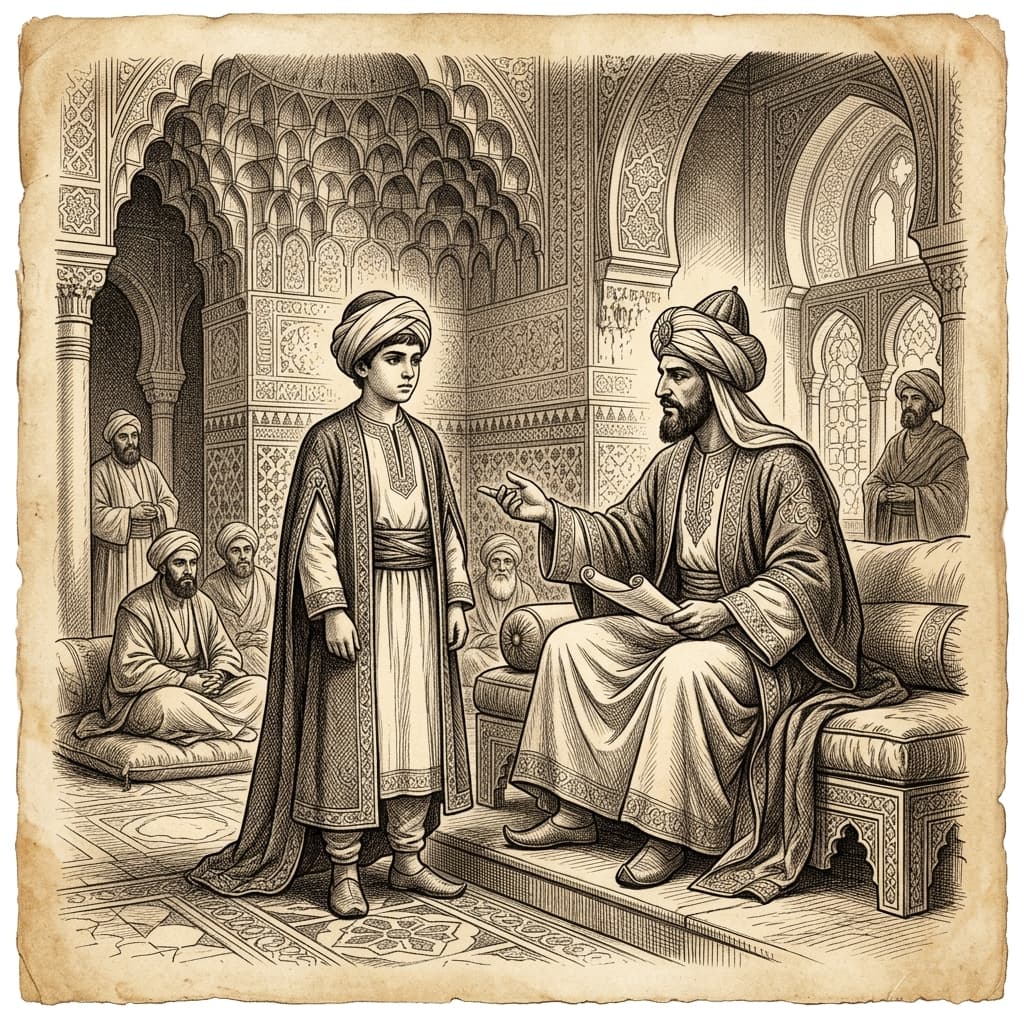
Born in 668 CE, al-Walid was the eldest son of Caliph Abd al-Malik and grew up during the turbulent years of the Second Fitna. He served as crown prince and participated in his father's military campaigns, gaining firsthand military and administrative experience before his accession to the caliphate in 705 CE.
He inherited a reunified and reformed empire from his father, one with a functioning administrative apparatus, standardized coinage, and a clear sense of imperial identity. His task was to channel this institutional strength into continued expansion and cultural expression.
Contributions
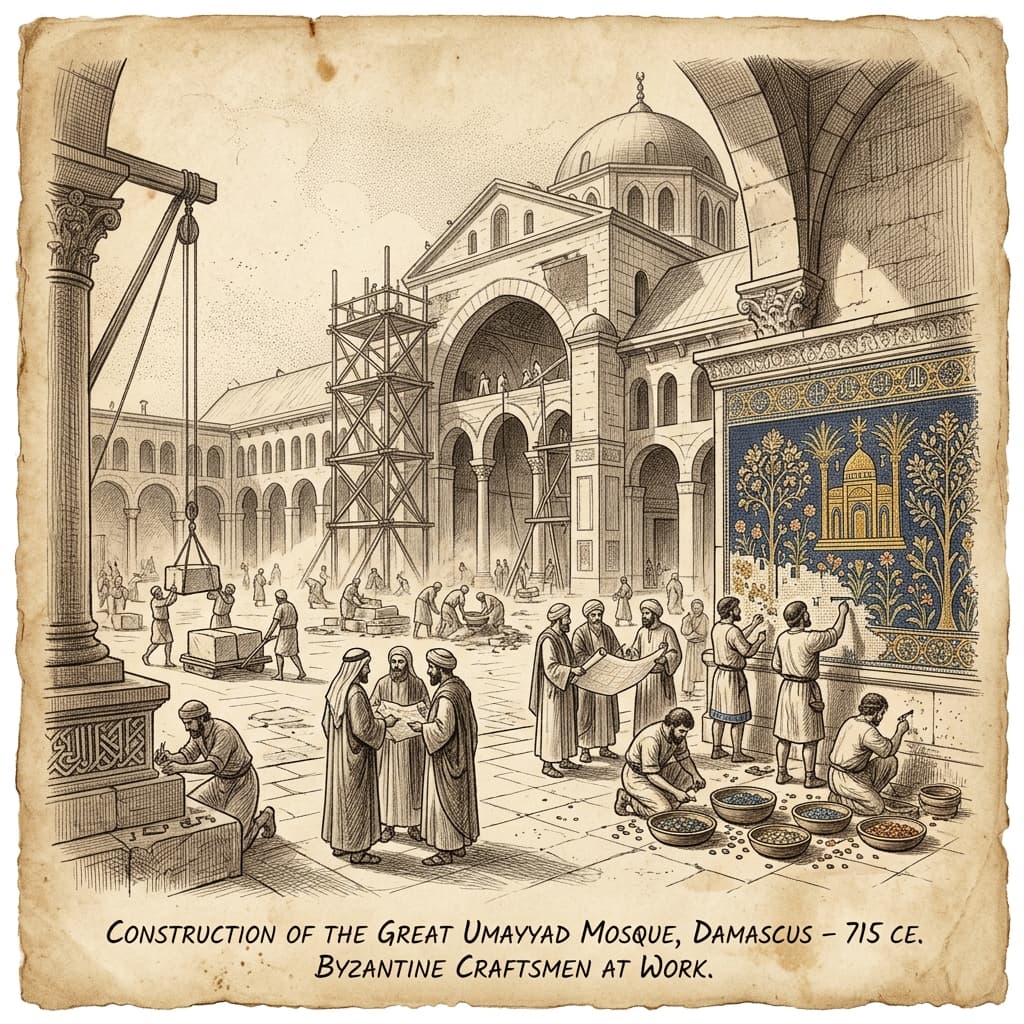
Al-Walid's most enduring contribution is architectural. The Great Mosque of Damascus (completed 715 CE), built on the site of the Church of St. John the Baptist, was the most ambitious building project of the early Islamic world — a structure whose mosaic decorations, triple-aisled prayer hall, and soaring courtyard set the standard for congregational mosque design.
Under his direction, the Prophet's Mosque in Medina was completely rebuilt and significantly expanded. He also reportedly commissioned the construction of hospitals and public works across the empire, including the first publicly funded institutions for the care of the sick and disabled. His military campaigns, conducted through generals like Tariq ibn Ziyad and Qutayba ibn Muslim, brought the empire to its maximum geographic extent.
Legacy
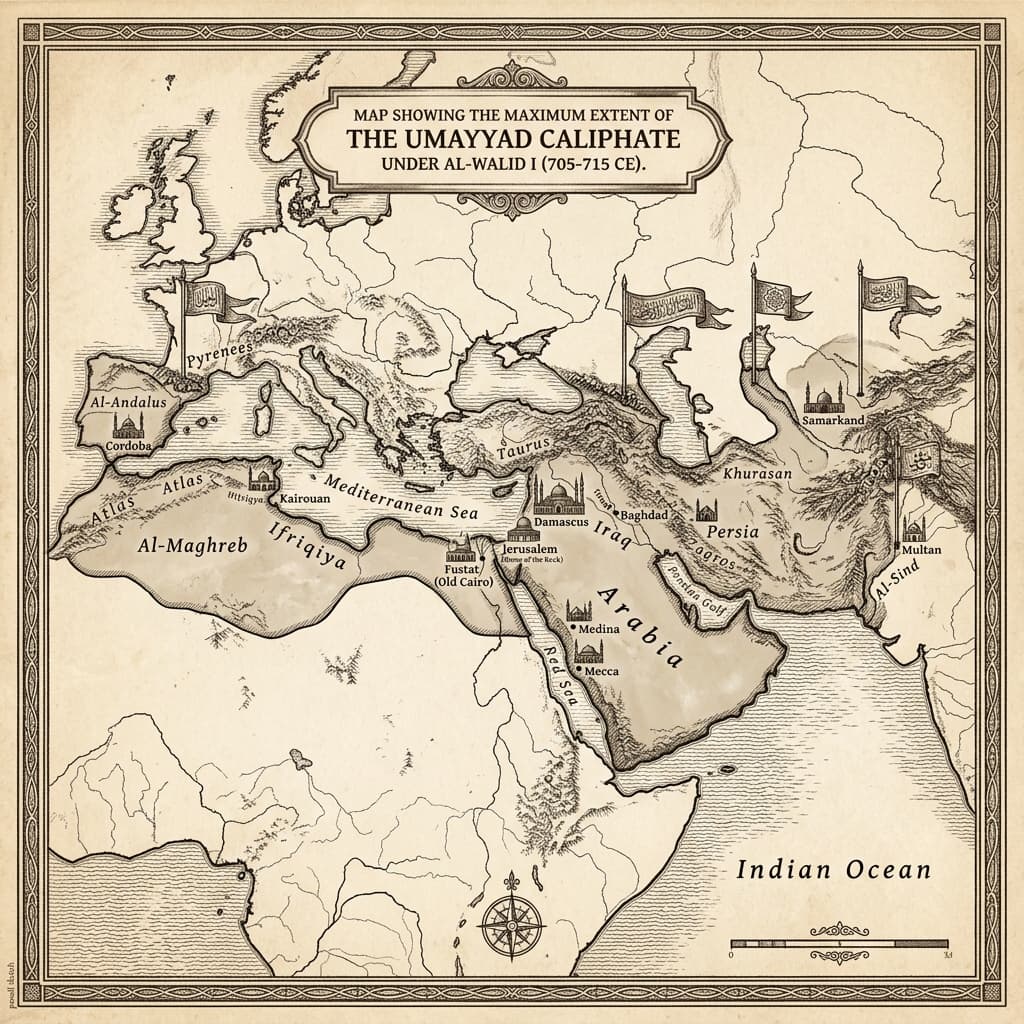
Al-Walid I's reign represents the high-water mark of Umayyad political and military power. The empire he governed was the largest contiguous land empire in history to that point, stretching from the Pyrenees to the Indus.
His architectural achievements outlasted his dynasty by more than thirteen centuries. The Great Mosque of Damascus remains one of the holiest and most admired buildings in the Islamic world. His model of the mosque as an integrated civic and spiritual complex — encompassing worship, education, commerce, and welfare — became the organizing principle of Islamic city-building.