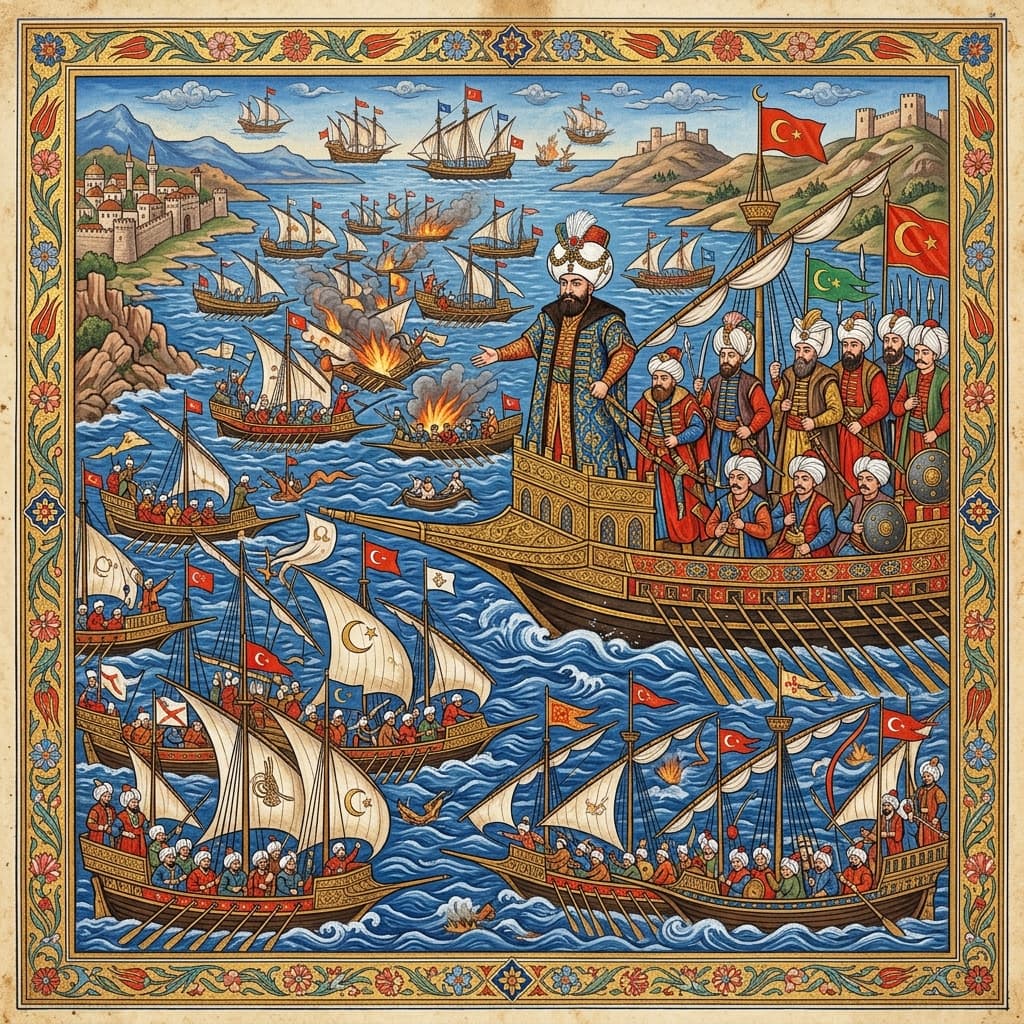
Introduction
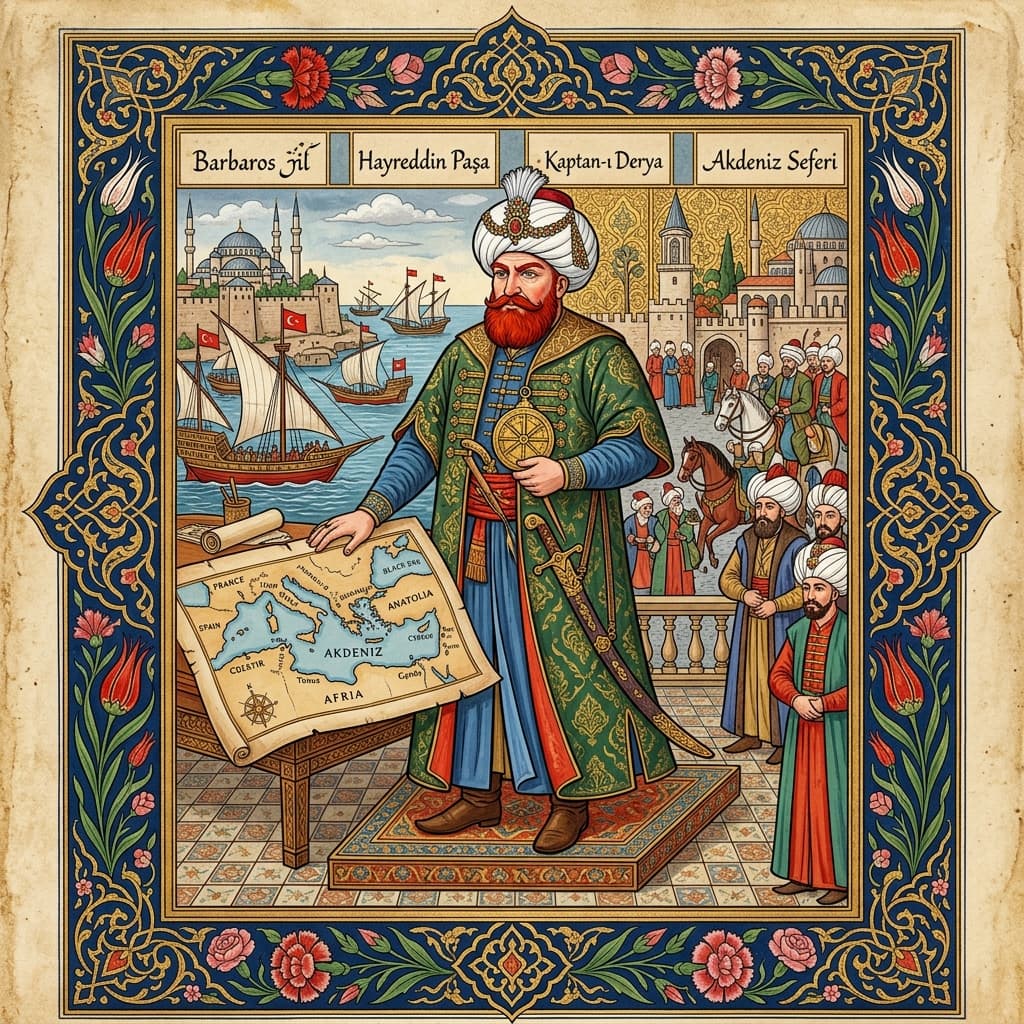
Barbaros Hayreddin Pasha (c. 1478–1546 CE), known in Europe as Hayreddin Barbarossa, rose from a privateer operating along the North African coast to become the Grand Admiral (Kapudan-i Derya) of the entire Ottoman fleet and the most feared naval commander of the 16th century.
His career transformed the Ottoman Empire into a dominant Mediterranean naval power and secured Muslim control of the North African coast from Morocco to the borders of Egypt.
Early Life
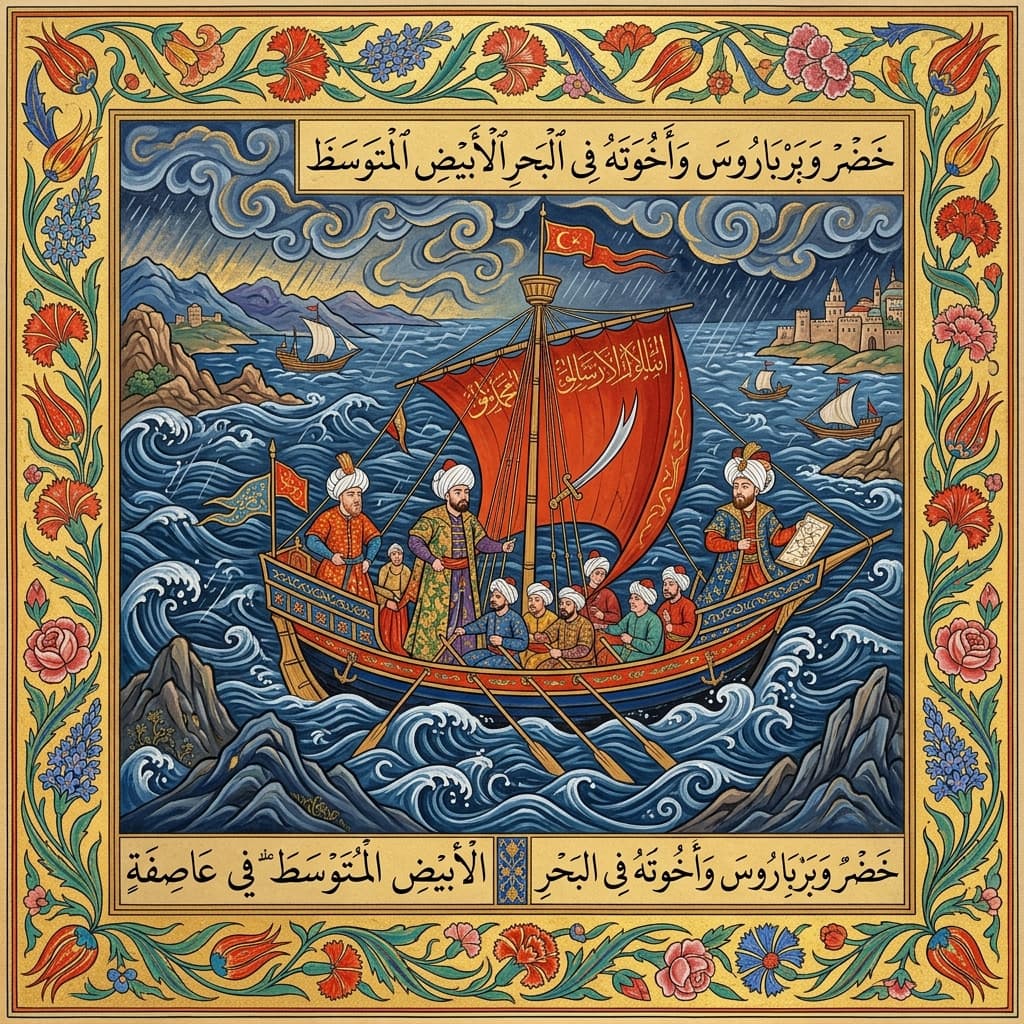
Born around 1478 CE on the Aegean island of Lesbos, Hayreddin and his brother Oruc were the sons of a Turkish sipahi (cavalry soldier) and a Greek woman. The brothers took to seafaring from an early age, initially trading between Ottoman and Christian ports before turning to piracy and privateering along the North African coast.
After the death of Oruc in 1518, Hayreddin took control of Algiers and placed it under Ottoman suzerainty to gain protection against Spanish attacks. This diplomatic masterstroke — trading nominal Ottoman sovereignty for military support — was the foundation of his rise to power.
Contributions
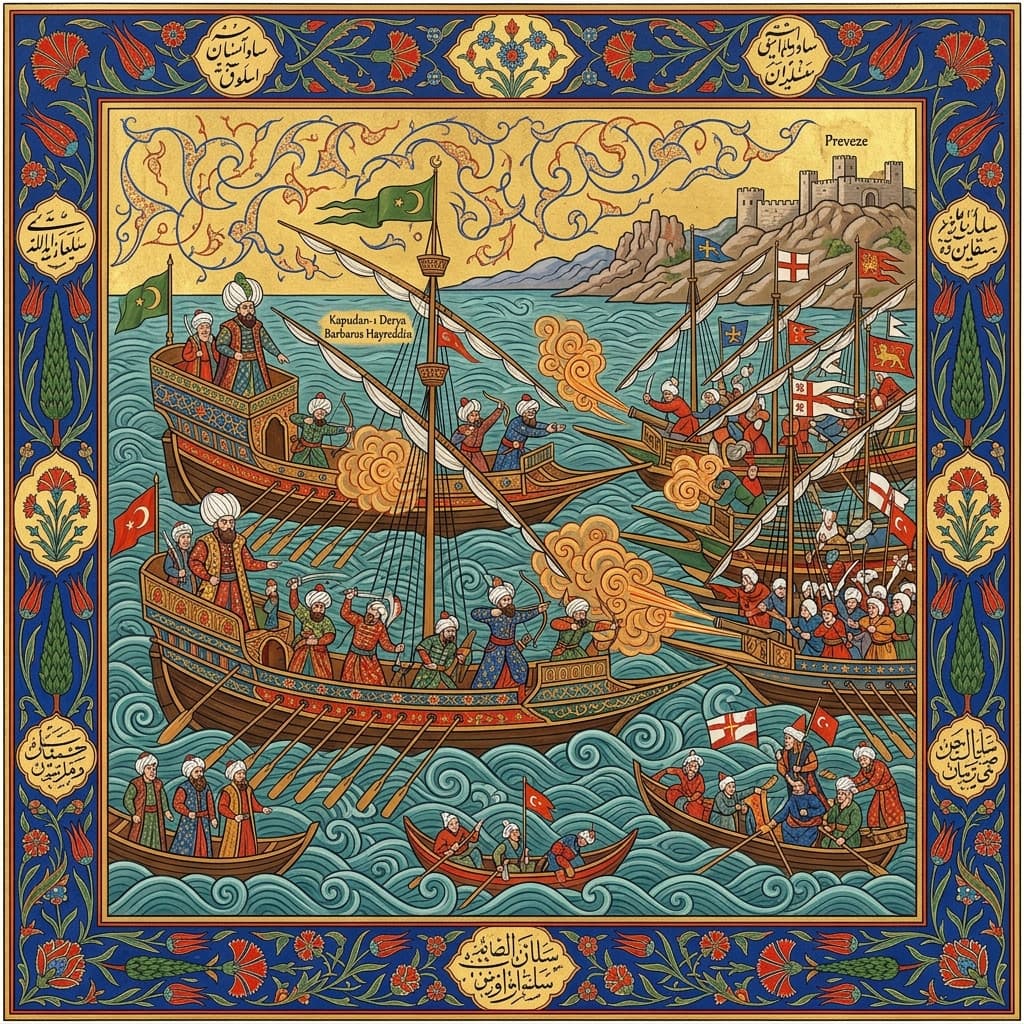
Hayreddin's greatest achievement was the Battle of Preveza in 1538, where his fleet decisively defeated a combined Holy League armada assembled by Pope Paul III, Emperor Charles V, and Venice. The victory secured Ottoman naval supremacy in the Mediterranean for decades and established the empire as a true maritime power.
As Grand Admiral, he reorganized the Ottoman naval administration, developed the shipyards at Istanbul into one of the largest in the world, and extended Ottoman influence across the western Mediterranean through a series of raids and diplomatic missions. His alliance with France — a remarkable diplomatic arrangement that aligned the Ottoman Empire with a Christian power against the Habsburgs — demonstrated sophisticated strategic thinking.
Legacy
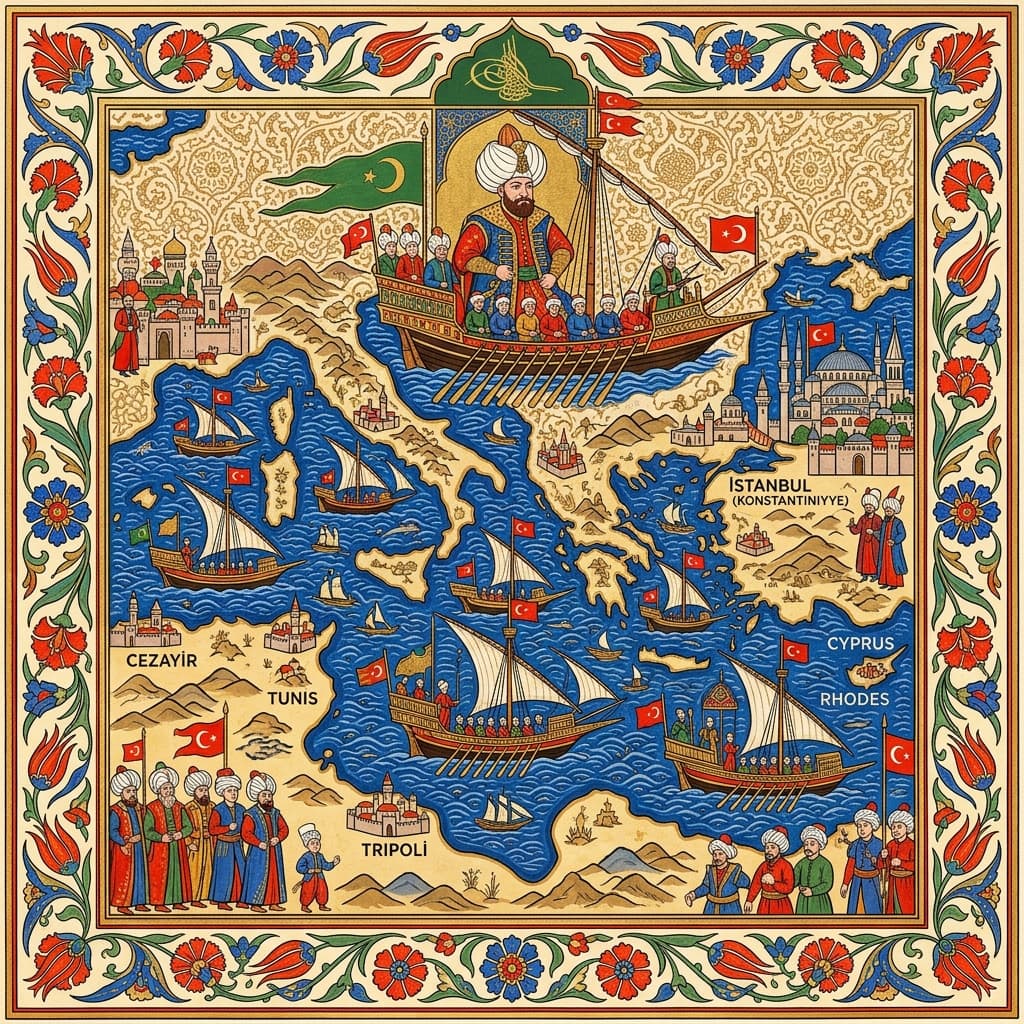
Barbaros Hayreddin Pasha's legacy transformed the Ottoman Empire's strategic position. Before him, the Ottomans were primarily a land power; after him, they were a formidable maritime empire capable of projecting force from the Black Sea to the Atlantic coast.
In Ottoman tradition, he is remembered as a hero of the seas and a symbol of the empire's expansive ambition. In North Africa, he is celebrated as the founding father of Algerian statehood. In European history, 'Barbarossa' became synonymous with the terrifying might of the Ottoman fleet, a name that inspired both dread and grudging admiration.