Introduction
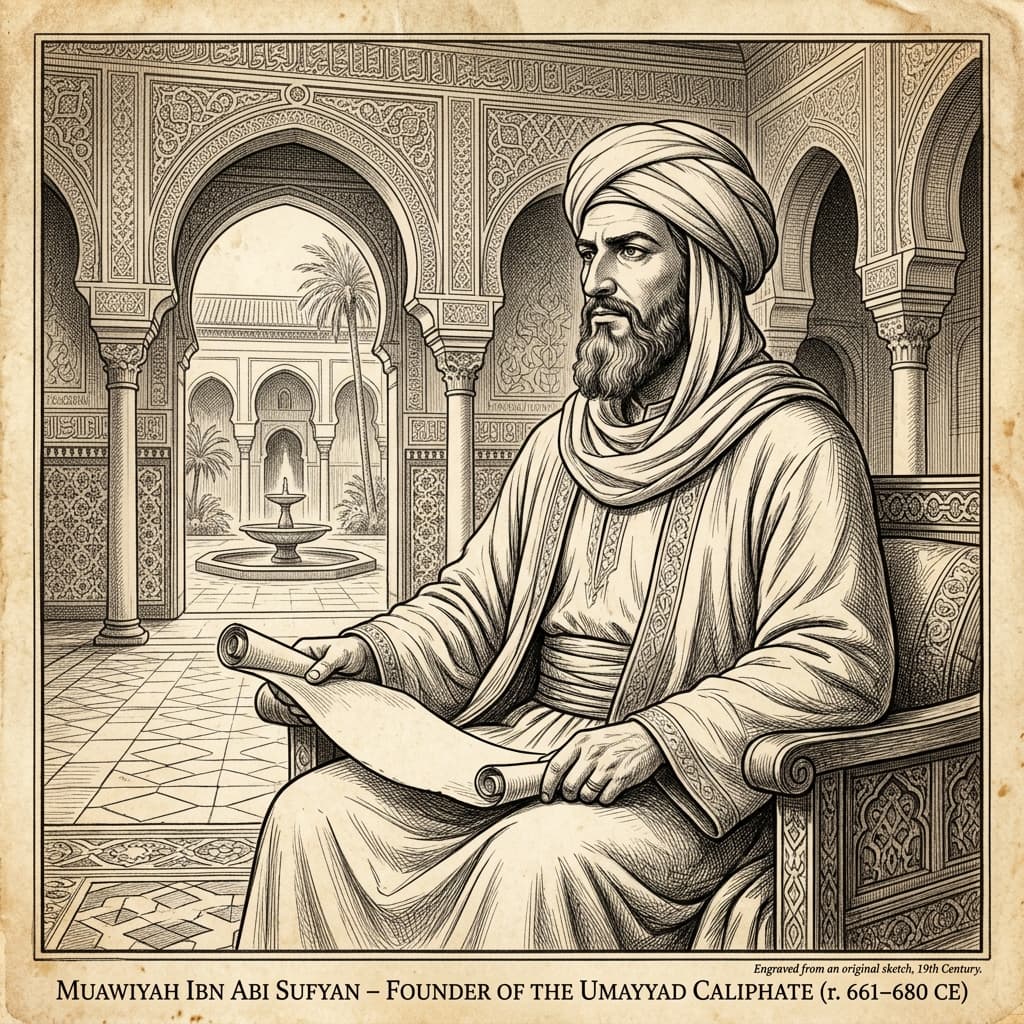
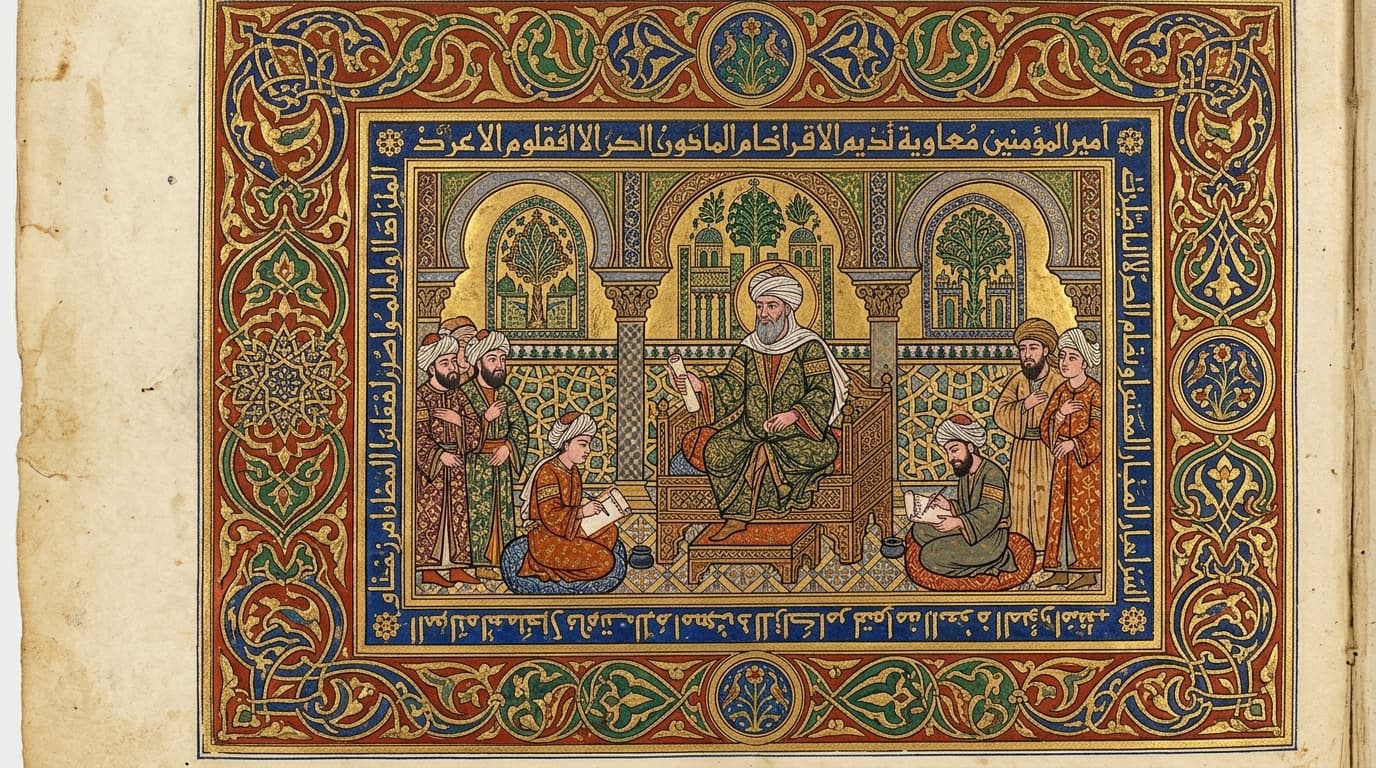
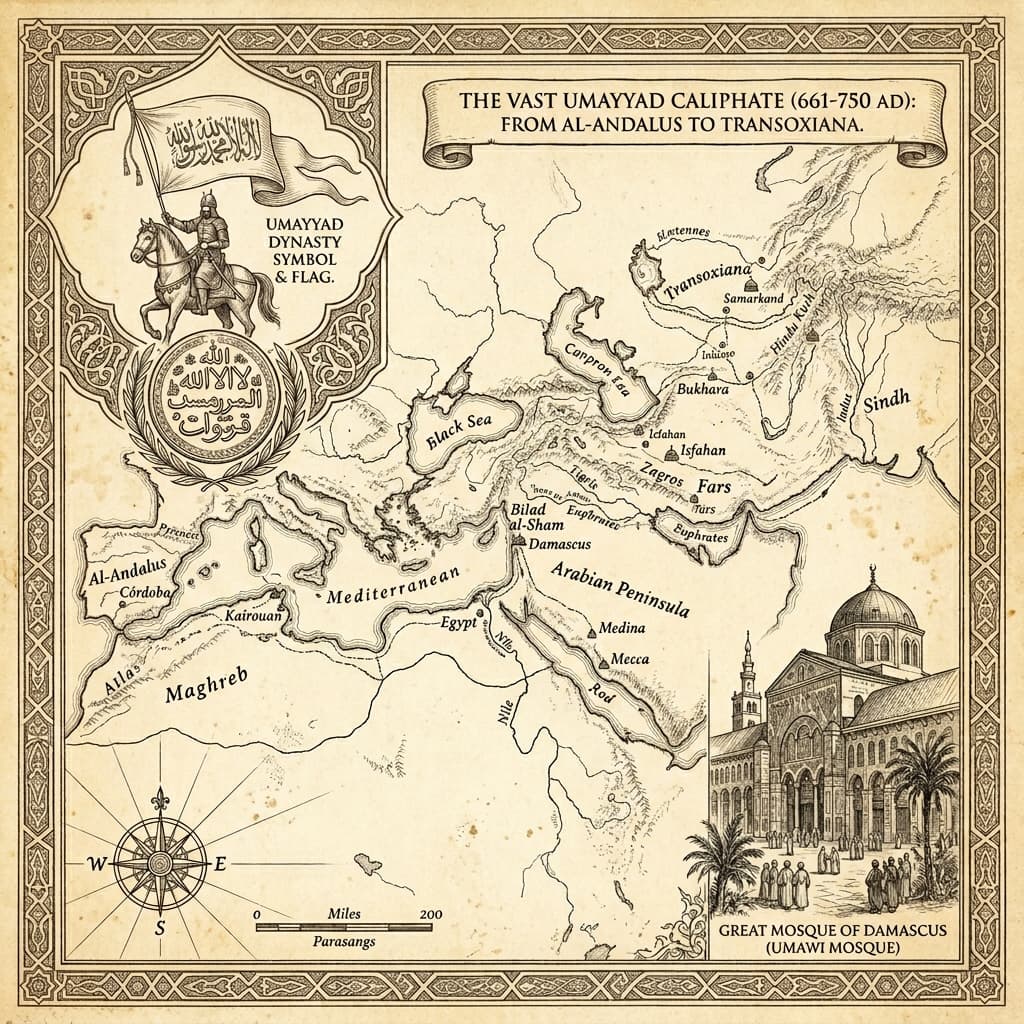
Muawiya ibn Abi Sufyan (602–680 CE) was the founder of the Umayyad Caliphate and the first Muslim ruler to establish hereditary dynastic succession. A master of statecraft who had served as governor of Syria for two decades before becoming caliph, he transformed the caliphate from an elective institution into a monarchy and established Damascus as the capital of an empire stretching from North Africa to Central Asia.
His reign (661–680 CE) remains one of the most debated in Islamic history — celebrated for its political effectiveness and condemned for the dynastic ambition that he introduced into Muslim governance.
Early Life
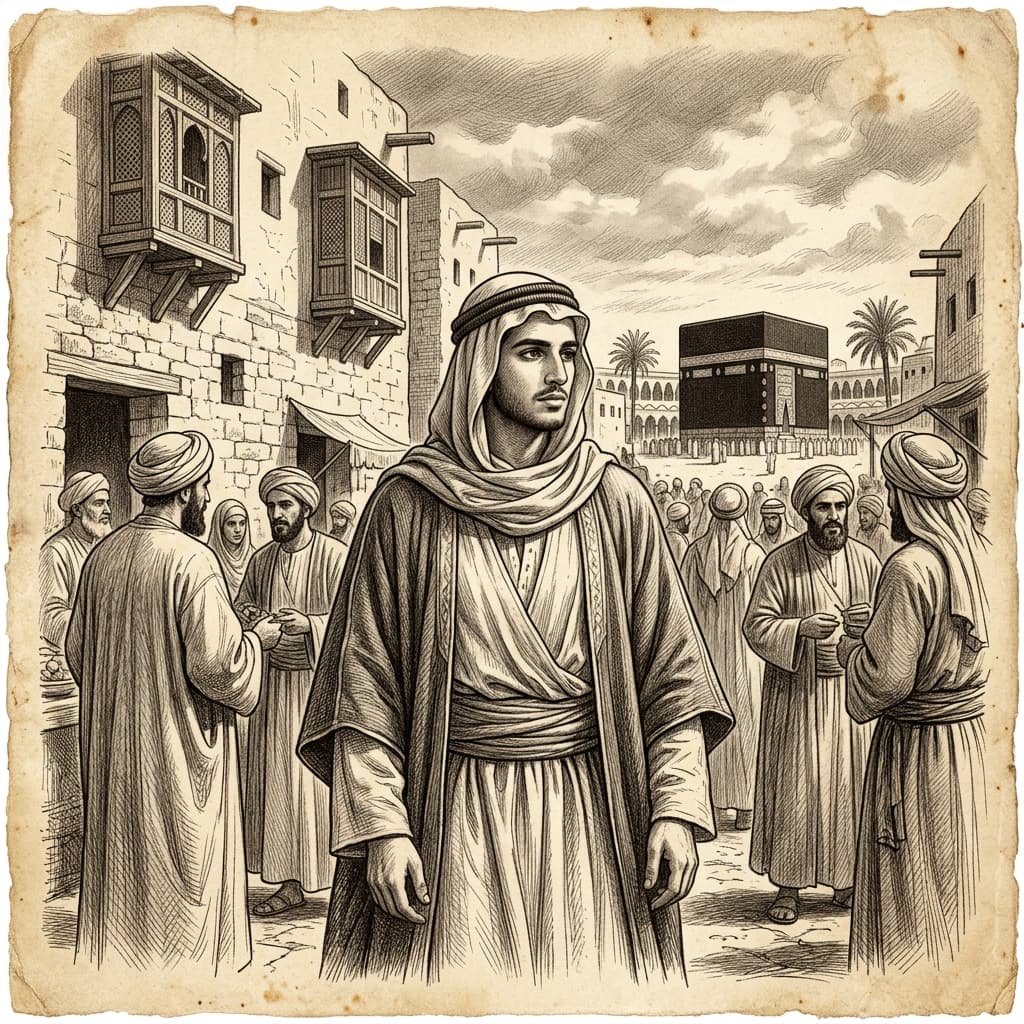
Born in Mecca around 602 CE into the Umayyad clan of the Quraysh, Muawiya was the son of Abu Sufyan, one of the Prophet Muhammad's fiercest opponents who eventually converted to Islam before the conquest of Mecca in 630 CE. Muawiya himself converted and became one of the scribes who recorded Quranic revelations.
After the Prophet's death, he served as secretary to Caliph Abu Bakr and then distinguished himself as a military commander in the conquests of Syria under Caliph Umar, who appointed him governor of Damascus. He expanded this role into governorship of all Syria, building a loyal and highly organized provincial administration over twenty years.
Contributions
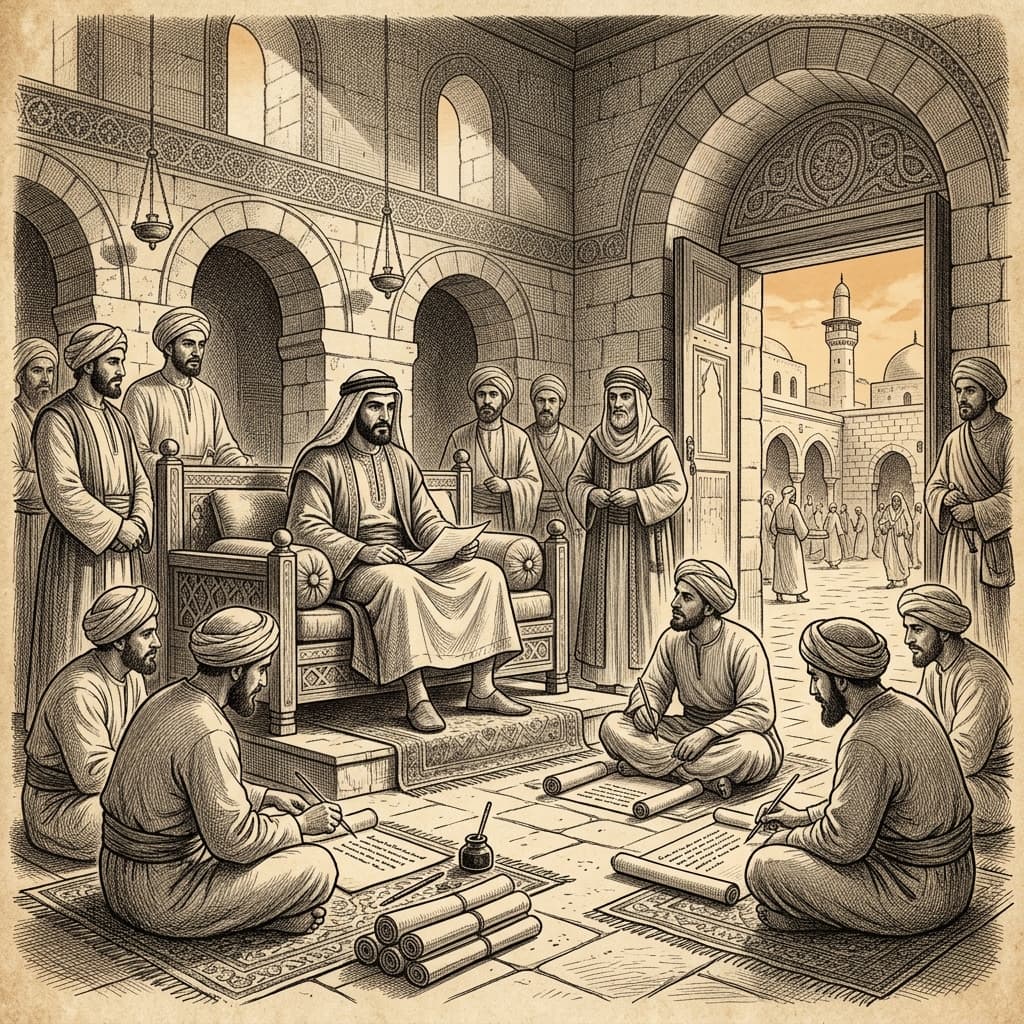
Muawiya's most consequential contribution was the creation of a stable, administratively sophisticated state. He modeled his governance on Byzantine administrative practices, retaining many existing officials, maintaining Greek as an administrative language alongside Arabic, and developing a system of provincial governance that proved remarkably durable.
He built the first significant Arab navy, launching attacks on Byzantine Cyprus and Rhodes and beginning the long contest for Mediterranean naval supremacy. He also initiated the first serious Arab siege of Constantinople (674–678 CE), demonstrating an imperial ambition that reached far beyond the Arabian Peninsula.
Legacy
Muawiya's legacy is deeply contested. Sunni tradition acknowledges his political effectiveness while criticizing his introduction of hereditary succession. Shia tradition views him as a usurper whose seizure of power from Ali ibn Abi Talib caused the foundational trauma of Islamic history.
His establishment of Damascus as the imperial capital and his embrace of Hellenistic administrative culture opened the caliphate to profound new influences. The Umayyad state he founded governed a larger territory than any previous empire, and the administrative and cultural framework he created gave his successors the tools to build one of the most consequential civilizations in world history.