Introduction
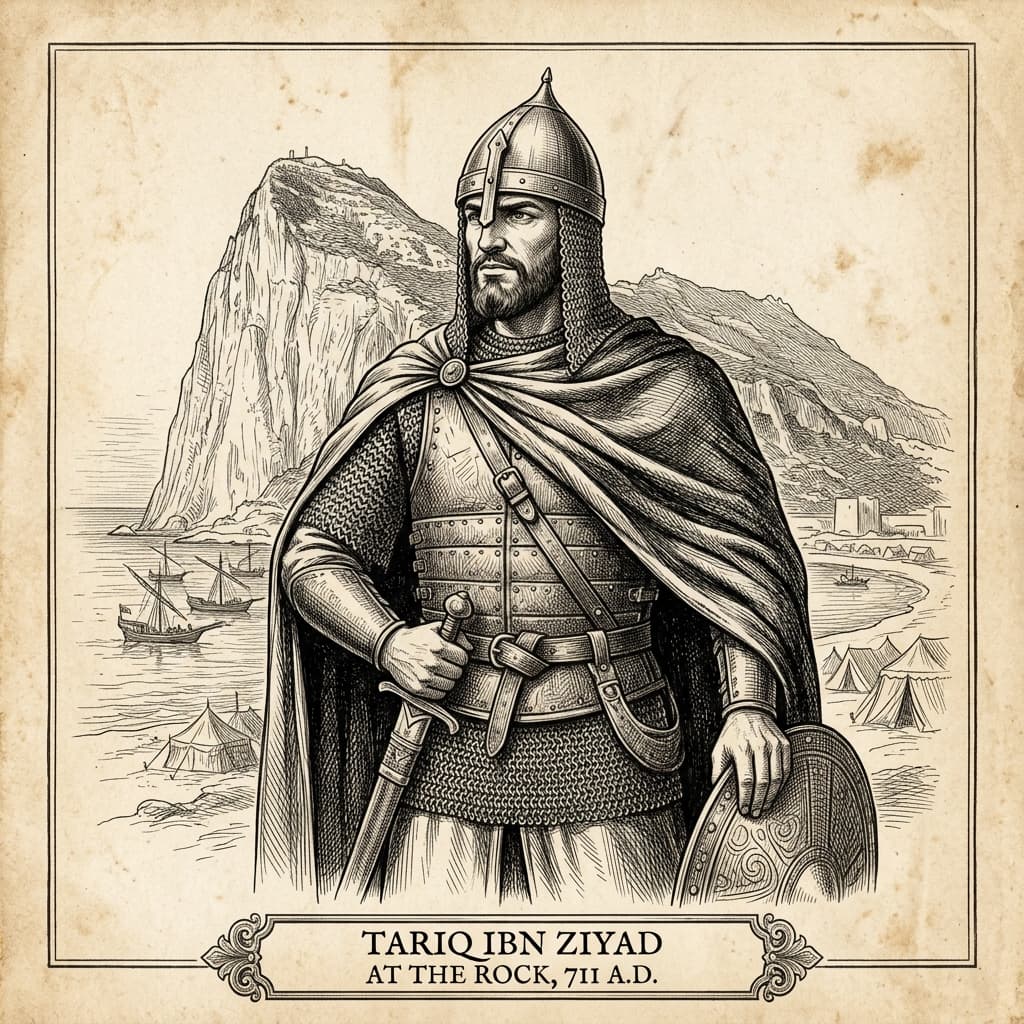
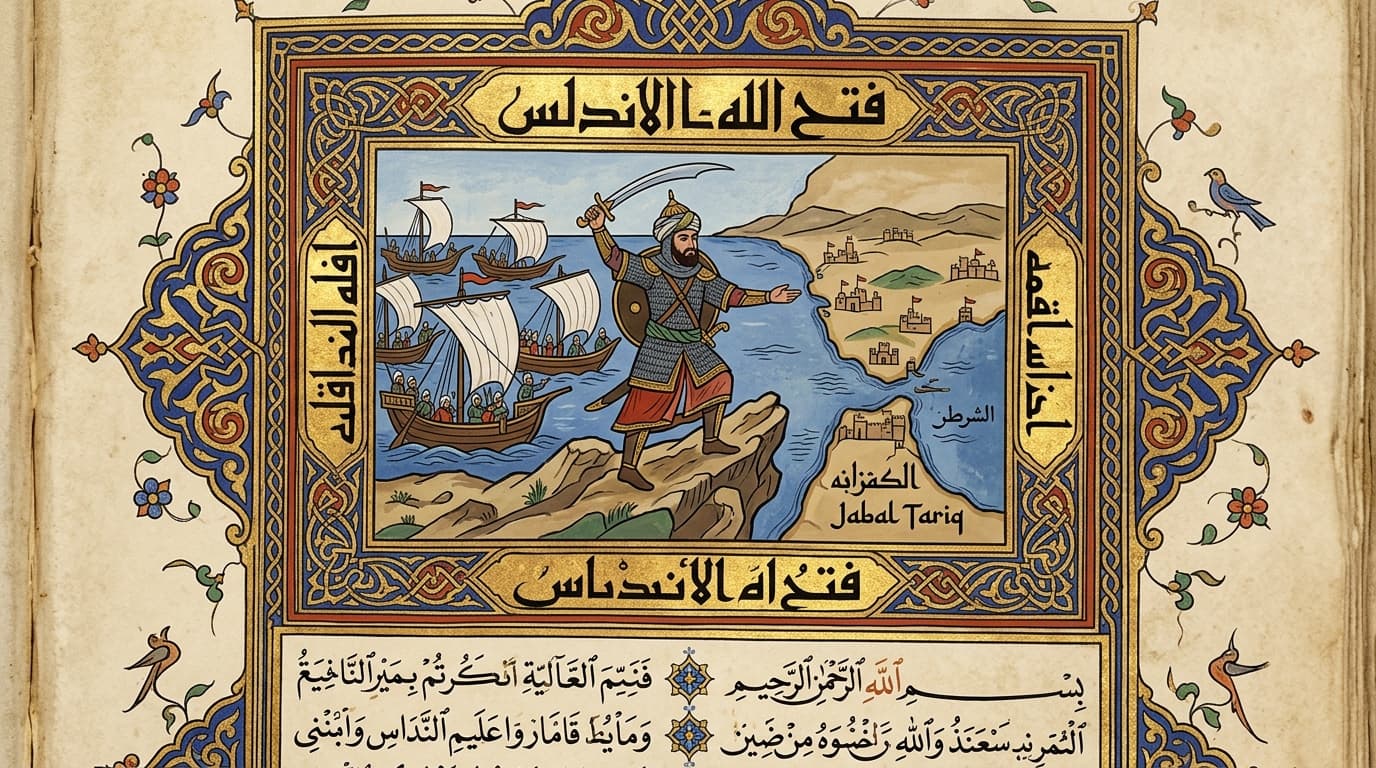
Tariq ibn Ziyad (c. 670–720 CE) was the Berber Muslim general whose crossing of the Strait of Gibraltar in 711 CE and conquest of Visigothic Iberia opened one of the most consequential chapters in world history. The rock at the crossing point, Jabal Tariq, bears his name to this day as Gibraltar.
In less than two years, Tariq's small force overthrew a kingdom, founded Al-Andalus, and established Muslim civilization on European soil — a presence that would shape the continent for nearly eight centuries.
Early Life
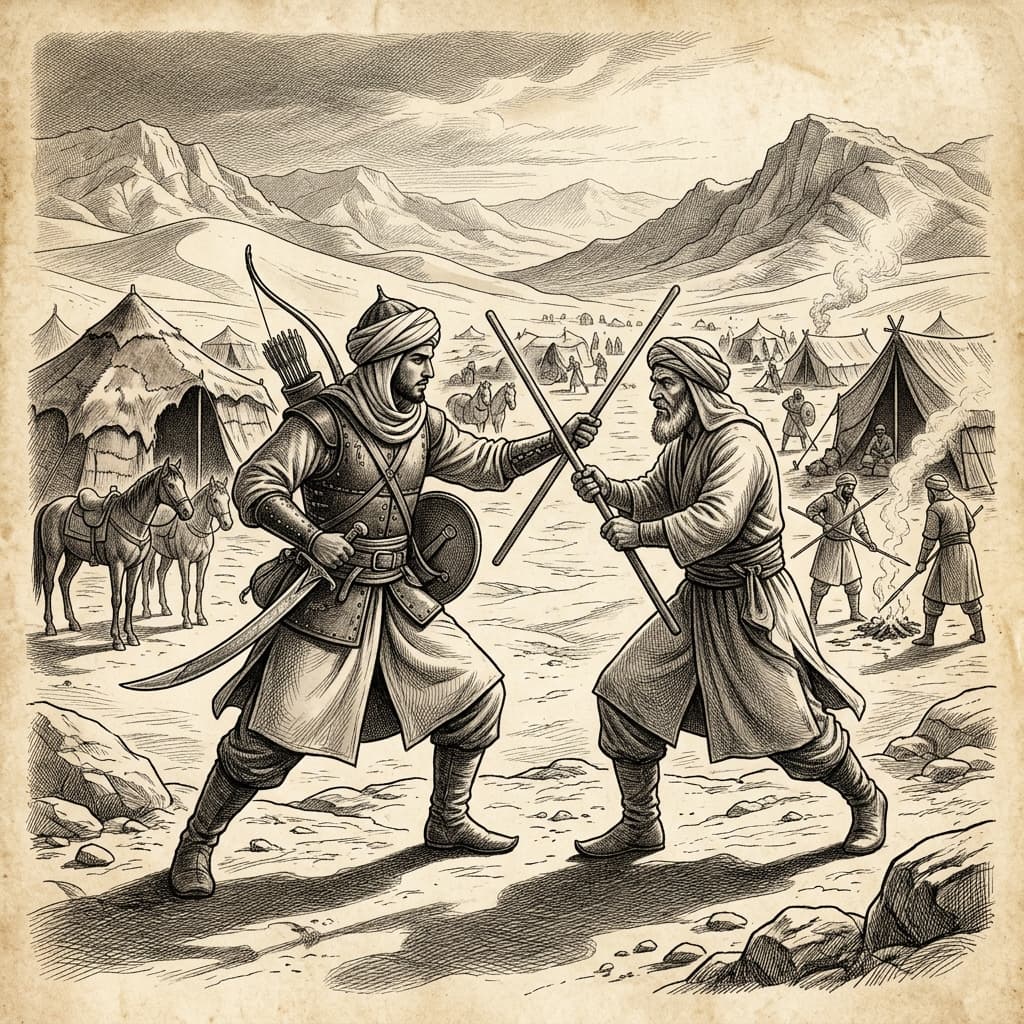
Tariq was born around 670 CE, almost certainly of Berber origin in the Maghreb, though the details of his early life are obscure. He converted to Islam following the Arab conquest of North Africa and rose through the ranks of the Umayyad military under the governorship of Musa ibn Nusayr.
As Musa's client and subordinate commander, Tariq earned a reputation for military effectiveness in the ongoing campaigns to consolidate Muslim control over the Berber populations of the western Maghreb. His appointment to lead the Iberian expedition reflected his commanders' trust in his judgment and his ability to lead the predominantly Berber force that would make the crossing.
Contributions
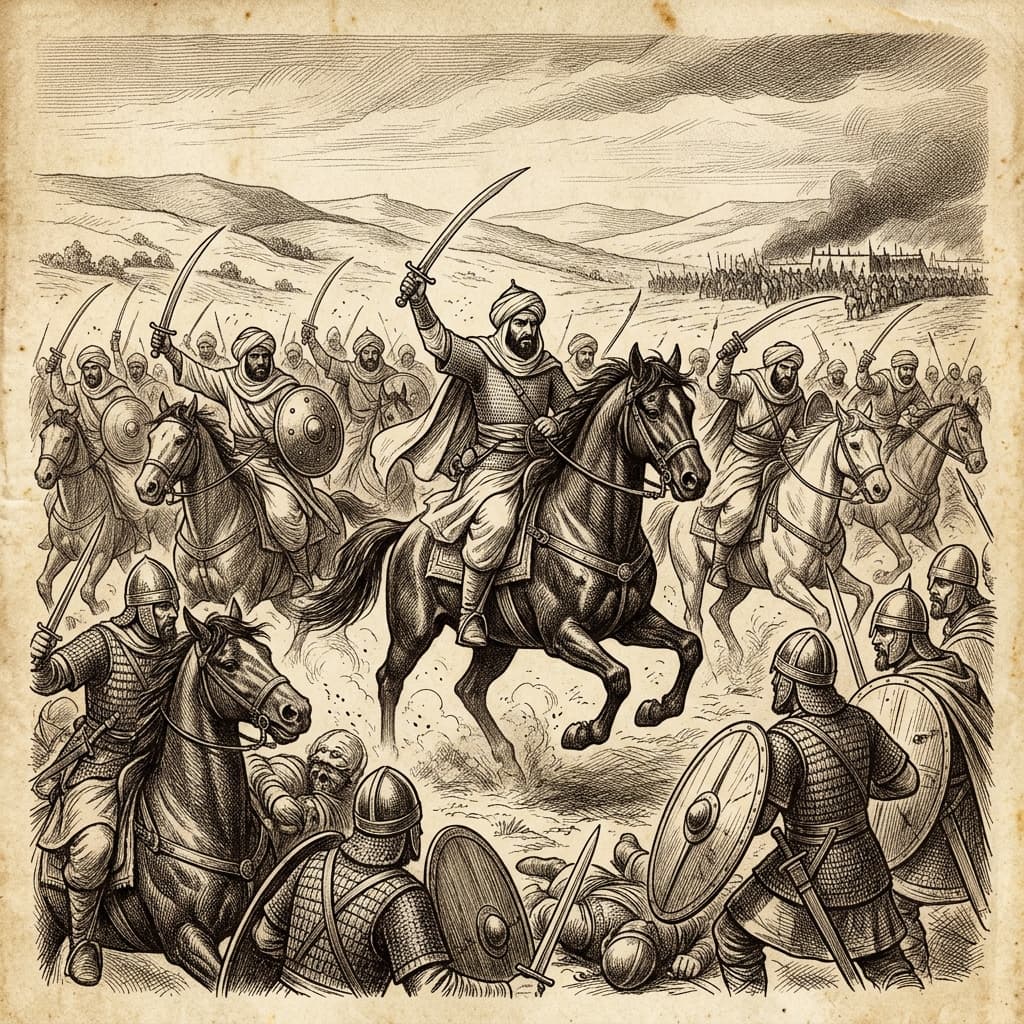
Tariq's great achievement was the conquest of the Iberian Peninsula. With approximately 7,000 soldiers — mostly Berber infantry — he crossed the Strait of Gibraltar in April 711 CE and defeated the Visigothic King Roderic at the Battle of Guadalete, exploiting the political divisions of the Visigothic court to achieve a victory of extraordinary swiftness.
He then moved rapidly northward, capturing Toledo, the Visigothic capital, along with Córdoba, Granada, and other major centers before his superior Musa ibn Nusayr arrived with a larger force. His tactical boldness — advancing deep into enemy territory with a small force before his position was consolidated — was audacious to the point of insubordination, but it proved decisive.
Legacy
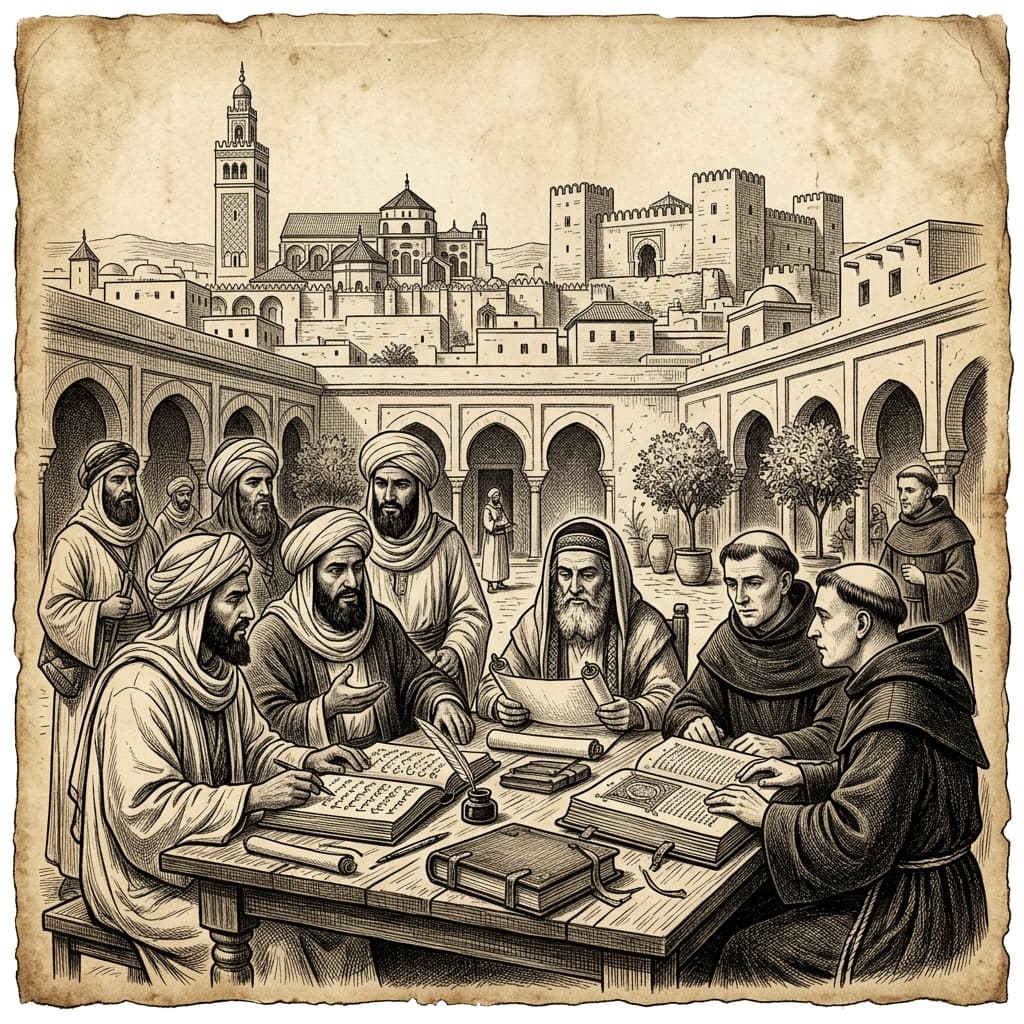
Tariq ibn Ziyad's conquest opened Al-Andalus, which for nearly 800 years would be one of the most culturally dynamic civilizations in the world — a multicultural society that preserved Greek learning, advanced mathematics and astronomy, and created an aesthetic tradition of extraordinary refinement.
In Islamic history, he is celebrated as a model of the ghazi commander — faithful, courageous, and effective. His famous speech to his troops before the crossing of Gibraltar — 'The sea is behind you, the enemy before you; where will you flee?' — is one of the most quoted pieces of military rhetoric in Arabic literature, whether or not it was actually delivered.