Introduction
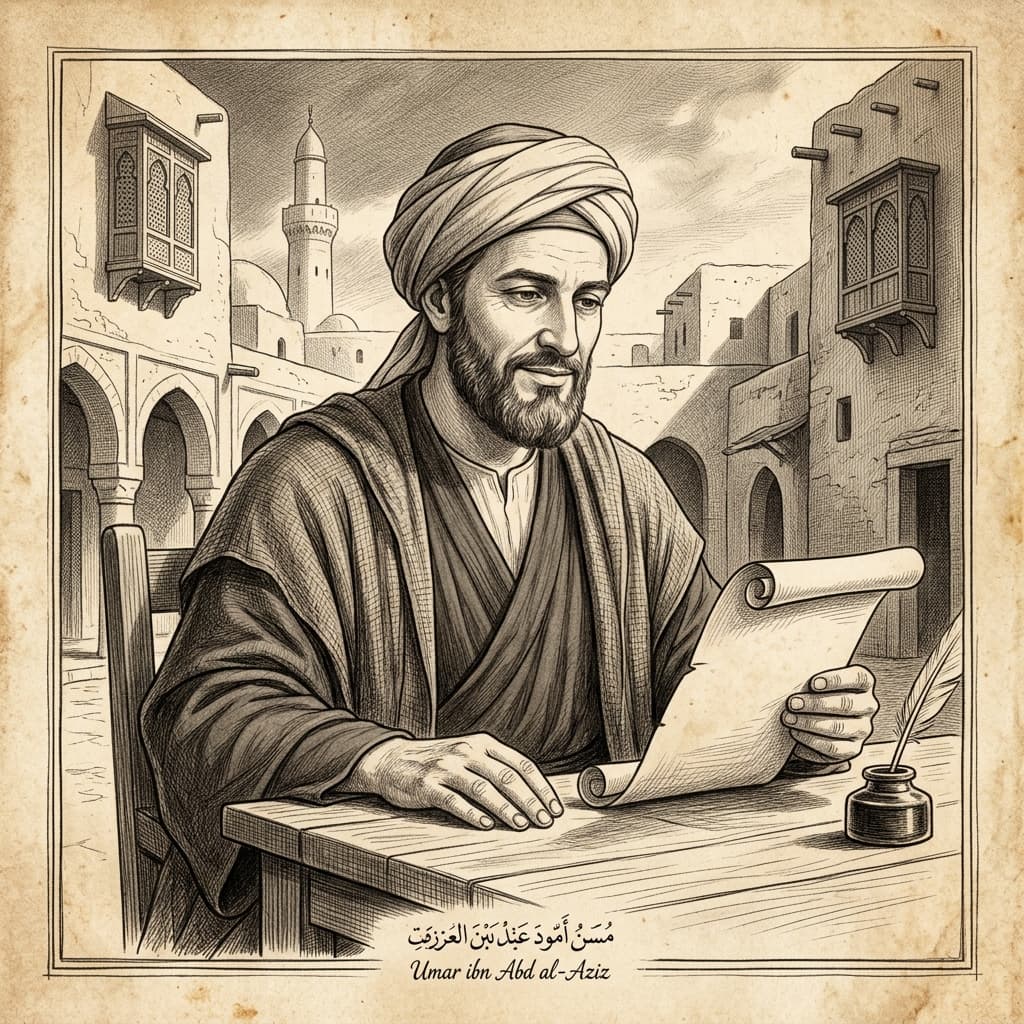
Umar ibn Abd al-Aziz (682–720 CE), known as Umar II, was the eighth Umayyad caliph and the only ruler of his dynasty to be celebrated across sectarian lines as a model of just and pious governance. His two-year caliphate (717–720 CE) stands as a remarkable attempt to realign Umayyad rule with the ethical principles of early Islam.
He is the only Umayyad caliph whom later Islamic scholars placed in the company of the Rightly Guided Caliphs, and his reign became a touchstone in debates about righteous governance for centuries afterward.
Early Life
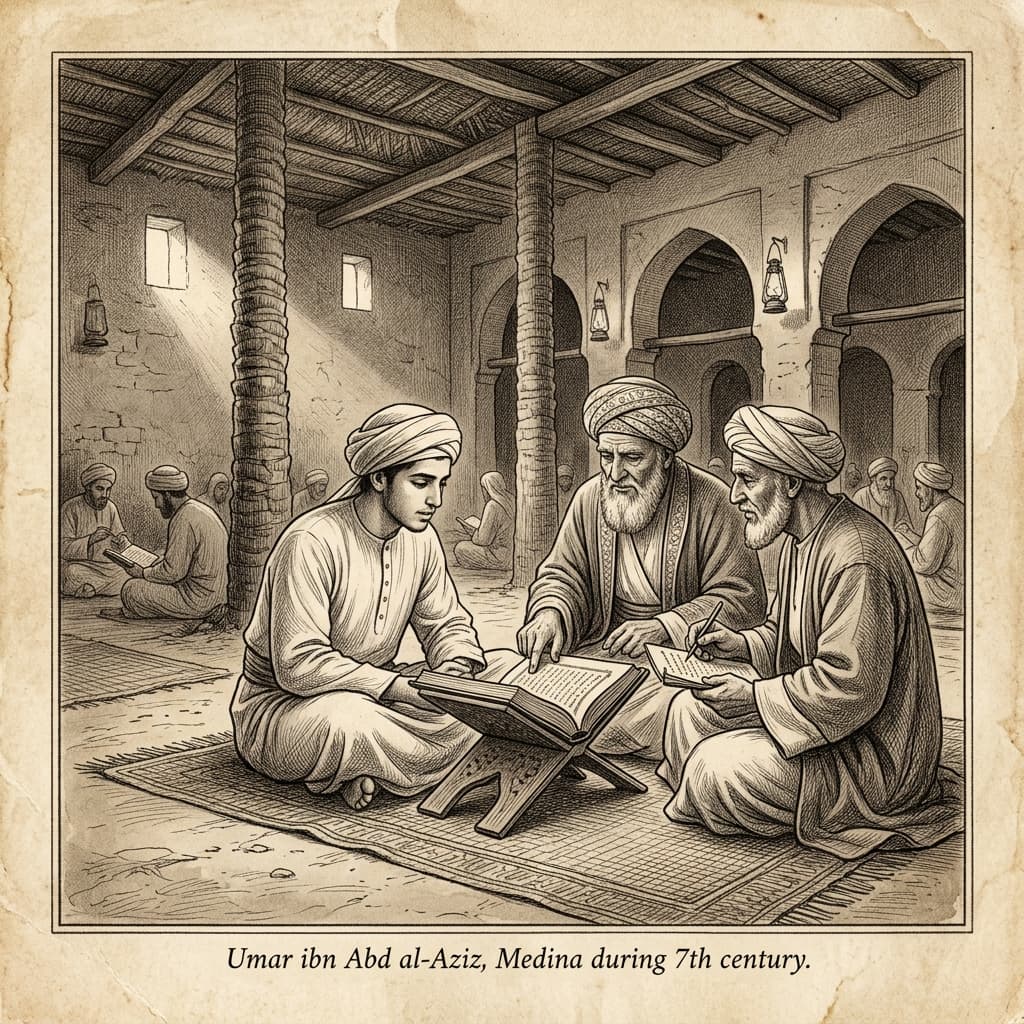
Born in 682 CE in Medina, Umar was the grandson of Caliph Marwan I and a nephew of Caliph Abd al-Malik. He was raised in Medina — the spiritual heartland of early Islam — and educated by some of the most respected scholars of the era, including the famous jurist Said ibn al-Musayyib.
He served as governor of Medina under Caliph al-Walid I, where he earned a reputation for fairness, accessibility, and genuine concern for the welfare of the population. When the caliphate passed to him after the death of Sulayman ibn Abd al-Malik in 717 CE, he was regarded as the most pious and learned of the Umayyad princes.
Contributions
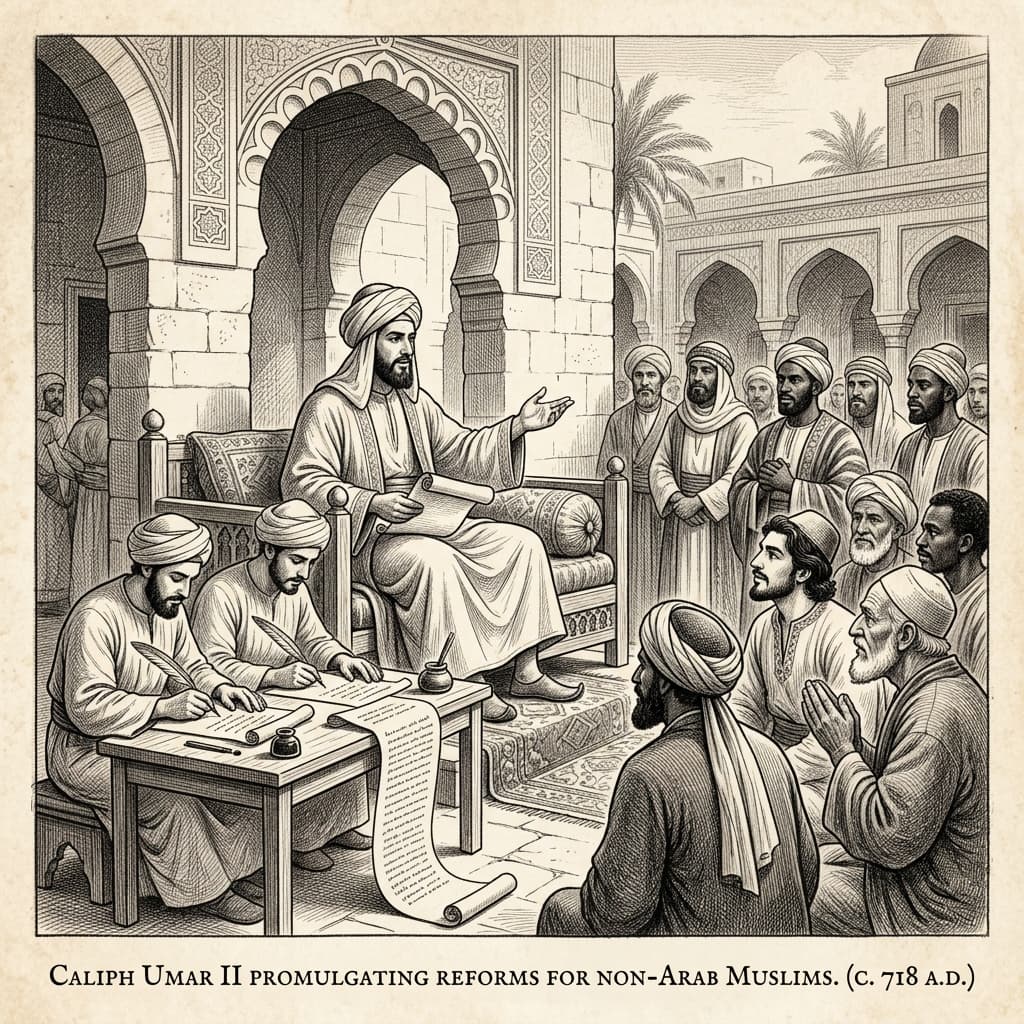
Umar II's reforms were comprehensive and principled. He ended the Umayyad practice of cursing Ali ibn Abi Talib in Friday sermons — a politically charged ritual that had alienated Shia Muslims for decades. He equalized the tax treatment of non-Arab Muslim converts (mawali), who under previous caliphs had been subjected to discriminatory taxation despite their conversion.
He reduced the extravagance of the caliphal court, personally returning state properties he considered unlawfully held, and attempted to model the simplicity associated with the early caliphs. He also ordered an end to ongoing hostilities on several fronts, preferring negotiated peace to costly warfare, and pursued a policy of active proselytization that emphasized persuasion over coercion.
Legacy
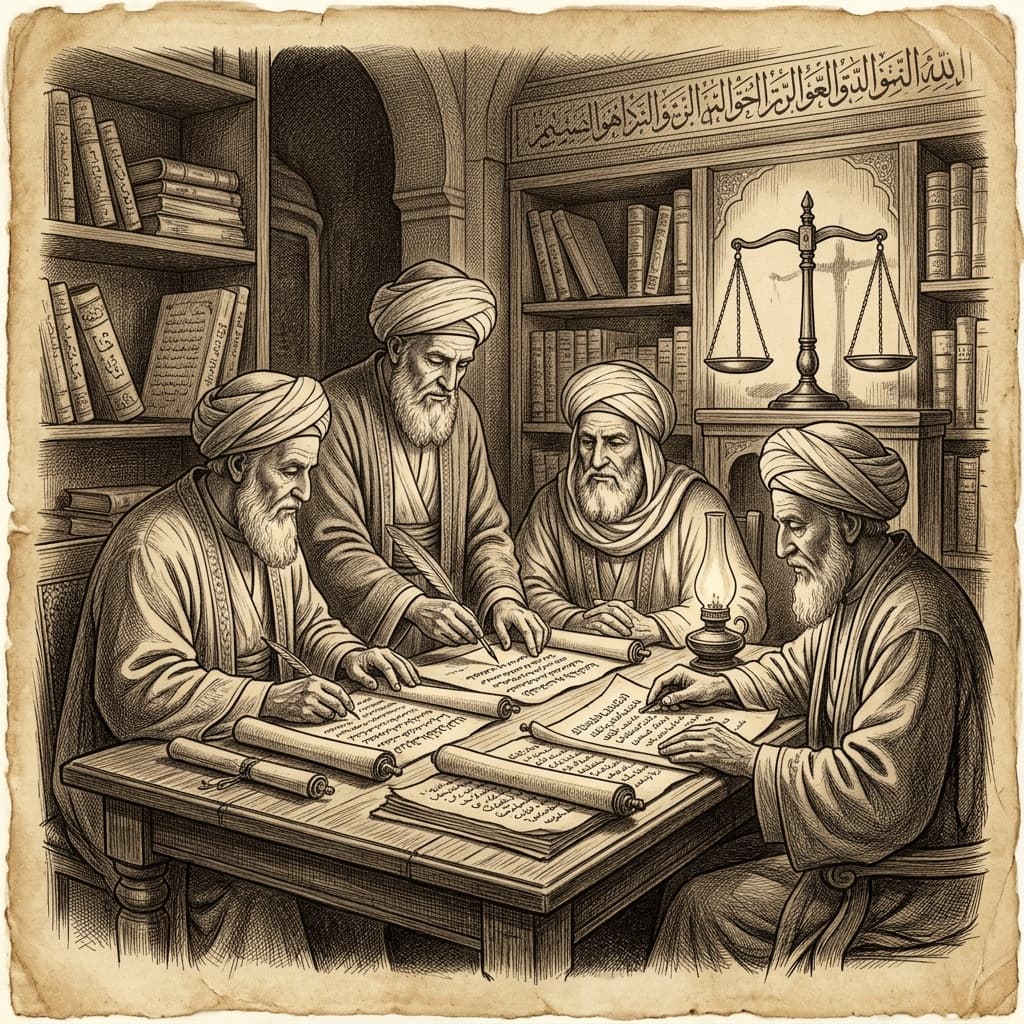
Umar II's legacy rests less on what he achieved — his reign was too brief to fully implement his reforms — than on what he represented: a vision of how Islamic governance could be conducted according to its own stated principles.
His reforms were largely reversed by his successor, but they planted seeds. The equalizing of non-Arab Muslims anticipated the social transformation that the Abbasid Revolution would bring. His example was invoked by reformers and critics of Muslim rulers for centuries afterward, and he remains one of the most admired figures in Islamic political tradition.