Through the Ages
Historical Eras
Each era holds thousands of remarkable lives. Select a period to discover the people who defined it.
3100 – 30 BCEAncient Egypt
One of the world's earliest and most enduring civilizations, Ancient Egypt flourished along the Nile for over three millennia. Known for the Great Pyramids, hieroglyphic writing, monumental temples, and profound advances in medicine, mathematics, and astronomy.
800 – 146 BCEAncient Greece
The birthplace of democracy, Western philosophy, and the Olympic Games. Ancient Greece produced Socrates, Plato, Aristotle, Homer, and pioneered advances in science, theatre, art, and political thought that continue to shape the modern world.
753 BCE – 476 CEAncient Rome
From a small city-state to one of the greatest empires in history, Rome dominated the Mediterranean and beyond. Roman law, engineering, military organization, and language shaped European civilization for centuries.
1070 BCE – 350 CEKingdom of Kush
A powerful Nubian kingdom along the upper Nile that rivaled Egypt. The Kushites built pyramids, developed their own writing system (Meroitic script), and at one point conquered and ruled Egypt as the 25th Dynasty.
100 – 940 CEKingdom of Aksum
A major trading empire in the Horn of Africa, Aksum controlled key Red Sea trade routes connecting Africa with the Mediterranean and India. Known for its towering stelae, early adoption of Christianity, and development of the Ge'ez script.
814 – 146 BCECarthaginian Empire
A Phoenician maritime powerhouse in North Africa, Carthage dominated western Mediterranean trade for centuries. Under Hannibal Barca, Carthage waged epic wars against Rome, crossing the Alps with war elephants in one of history's most daring military campaigns.
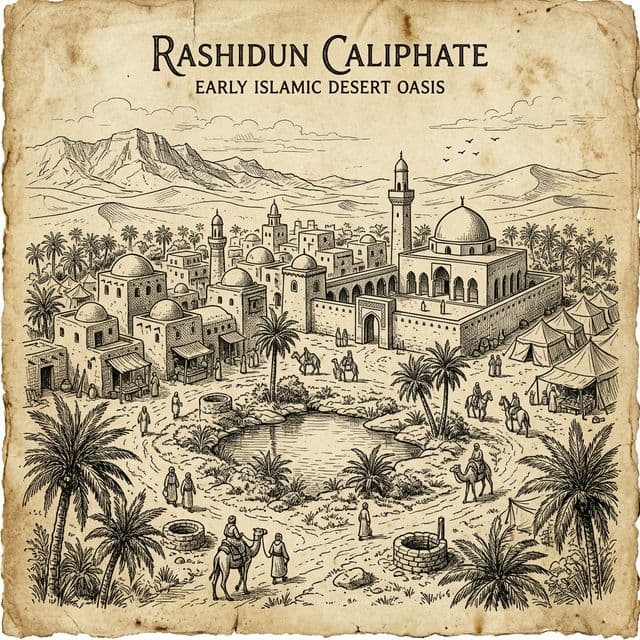
632 – 661 CERashidun Caliphate
The first four caliphs who succeeded Muhammad. This era saw the rapid expansion of Islam out of the Arabian Peninsula into the Levant, Egypt, and Persia.
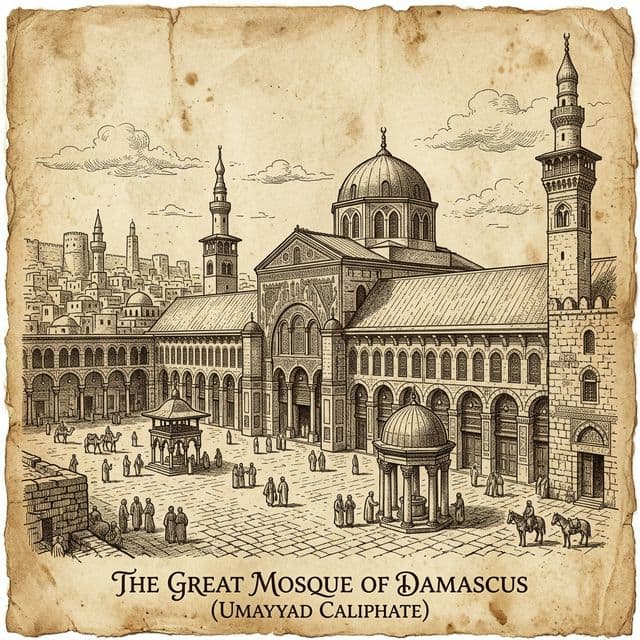
661 – 750 CEUmayyad Caliphate
One of the largest empires in history, spanning from Spain to India. Known for establishing a centralized administration and monumental architecture.
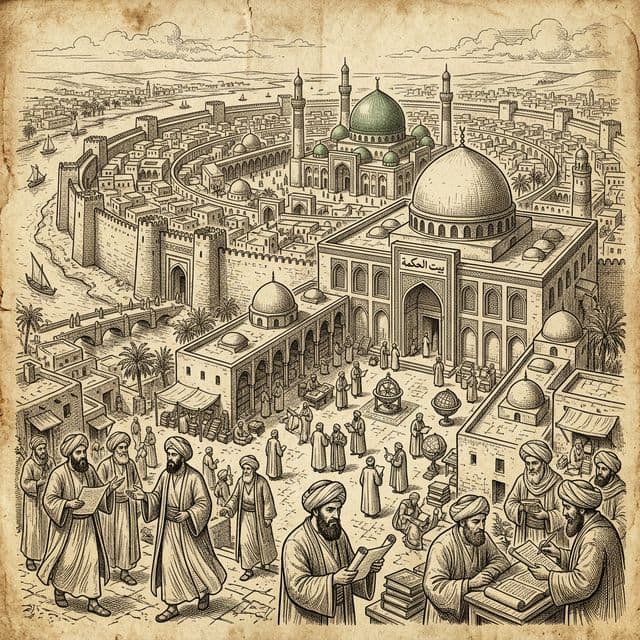
750 – 1258 CEAbbasid Caliphate
The true golden age of Islamic culture, science, and philosophy, centered in Baghdad. A period marked by the Translation Movement and profound intellectual achievements.
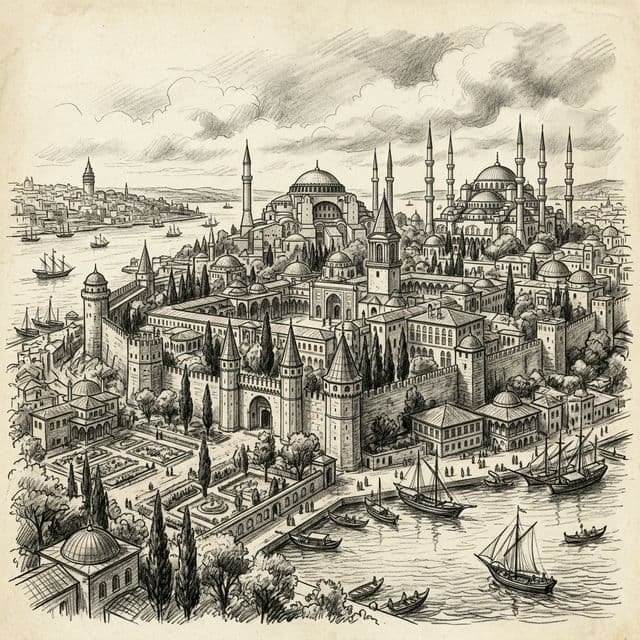
500 – 1500 CEMedieval European Age
An era of feudal kingdoms, Gothic cathedrals, scholastic philosophy, and the Crusades. A time of religious authority, chivalric culture, and gradual intellectual awakening.
1300 – 1600 CEThe Renaissance
A cultural rebirth originating in Italy that spread across Europe, reviving Greco-Roman ideals and producing monumental achievements in art, literature, science, and humanism.
1400 – 1700 CEAge of Exploration
European seafarers mapped the globe, connecting continents and civilizations for the first time. A period of discovery, colonization, and profound cross-cultural exchange.
1299 – 1922 CEOttoman Empire
One of history's most enduring empires, the Ottomans bridged East and West, fostering art, architecture, law, and trade across three continents for over six centuries.
1526 – 1857 CEMughal Empire
A synthesis of Persian, Timurid, and Indian cultures that produced extraordinary monuments, miniature painting, poetry, and administrative achievements across the Indian subcontinent.
1687 – 1789 CEThe Enlightenment
A philosophical revolution emphasizing reason, individual rights, and empirical inquiry. Thinkers of this era laid the intellectual foundations for modern democracy and science.
1200 BCE – 1492 CEPre-Columbian Americas
Vast civilizations — Aztec, Maya, Inca and dozens more — flourished across the Americas, developing sophisticated agriculture, architecture, astronomy, and governance entirely independently.
Choose Your Journey
Explore by Region
Click on a region to discover the notable figures who shaped its history across different eras.
